
Can you apply for a green card from inside the United States, and could a mistake put your case at risk? An I-485 adjustment of status lawyer can help assess more than whether the form is complete. Eligibility may depend on your immigration category, visa availability, personal history, and supporting evidence. A useful first step is to review how those factors fit together before preparing a filing.
It’s understandable to be unsure which forms to file, what records to provide, or how to prepare for a USCIS interview. This guide explains how Form I-485 fits into the adjustment process, what eligibility and evidence issues may arise, and when legal representation may be useful. It also outlines questions to ask counsel so you can make an informed decision about your case.
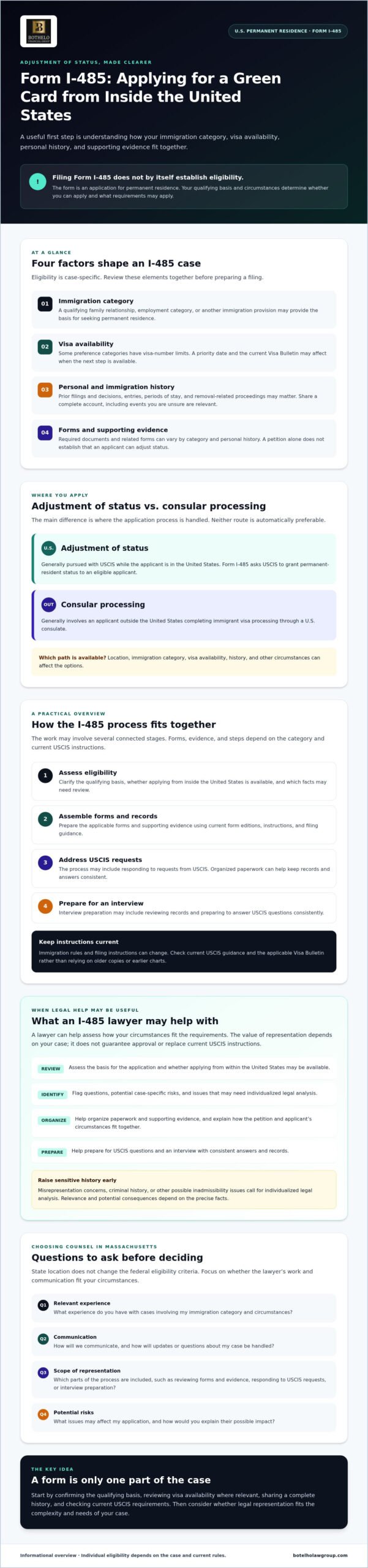
The process can involve assessing eligibility, assembling supporting forms and records, responding to USCIS requests, and preparing for an interview. Immigration rules and filing instructions can change, so check current USCIS guidance. A lawyer’s value may include organizing paperwork, identifying potential risks, and explaining how they could affect your application.
Key Takeaways
- Form I-485 is the application for permanent residence from within the United States, but filing it does not by itself establish eligibility.
- Your immigration category, personal history, and visa availability may affect whether you can apply and what requirements you must meet.
- An I-485 adjustment of status lawyer may help identify case-specific risks and clarify whether legal representation fits your circumstances.
- Forms, supporting evidence, filing steps, and interview preparation depend on your category and current USCIS instructions.
- When evaluating a Massachusetts lawyer, ask about relevant experience, communication, the scope of representation, and how potential risks will be addressed.
What an I-485 Adjustment of Status Lawyer Does in a Green Card Case
Adjustment of status is the process of applying for lawful permanent residence from within the United States, if you meet the applicable requirements. Form I-485 is the application submitted to U.S. Citizenship and Immigration Services (USCIS); it is not, by itself, the legal basis for a green card. That basis may arise through a qualifying family relationship, an employment category, or another immigration provision. An Adjustment of Status overview can explain the general concept, but your eligibility depends on your circumstances and current rules.
An I-485 adjustment of status lawyer may review the basis for your application, assess whether you can apply from within the United States, and flag questions to resolve before filing. Counsel may also help organize supporting evidence and prepare you to answer USCIS questions consistently. This review is specific to your case. It does not guarantee approval or replace the need to follow current agency instructions.
What does Form I-485 ask an applicant to do?
Form I-485 asks USCIS to grant permanent-resident status to an eligible applicant inside the United States. It collects information relevant to the applicant’s identity, immigration history, and eligibility. Required supporting documents and related forms can vary by category and personal history. For example, a family-based case may involve a qualifying relative’s petition, but the relationship alone doesn’t establish that the applicant can adjust status. Before preparing an application, check the latest USCIS form edition, instructions, and filing guidance. Older copies may not reflect current requirements.
How is adjustment of status different from consular processing?
The main difference is where the application is handled. Adjustment of status is generally pursued with USCIS while the applicant is in the United States. Consular processing generally involves an applicant outside the country completing immigrant visa processing through a U.S. consulate. Neither route is automatically preferable. The applicant’s location, immigration category, visa availability, history, and other circumstances can affect which process is available.
Before choosing a path, clarify the qualifying basis for the case and whether any facts could affect eligibility. A family petition may be an important first step, but it is separate from the I-485 application. For more context on the petition stage, see the family-based green card process. Immigration cases are governed by federal rules, so living in Massachusetts does not change the legal eligibility criteria. A lawyer can help explain how the petition and the applicant’s circumstances fit together.
I-485 Eligibility: How Your Immigration Category and History Matter
A qualifying family relationship or employment petition may provide a basis to seek permanent residence, but it doesn’t automatically mean you can file Form I-485 or qualify for approval. The rules depend on your immigration category and full record. An I-485 adjustment of status lawyer can help assess how those factors interact before you submit an application.
How do family-based and employment-based cases differ?
In both types of cases, an underlying petition establishes or supports the immigration basis. Form I-485 is a separate application, and the petition alone doesn’t resolve whether the applicant may adjust status. Some preference categories are subject to visa-number limits. In those cases, the priority date and Visa Bulletin can affect when an applicant may take the next step. Check the current chart and category-specific USCIS instructions rather than relying on an earlier bulletin. For more context on family petitions, see this family-based green card attorney guide.
Which case-history issues should an applicant raise?
Give counsel a complete account of prior immigration filings and decisions, entries into the United States, periods of authorized or unauthorized stay, and any removal-related proceedings. Mention an earlier application even if it was withdrawn or you’re unsure whether an event matters. A full account helps counsel evaluate the case and prepare consistent answers and records.
Misrepresentation concerns, criminal history, or other possible inadmissibility issues call for individualized legal analysis. Their relevance and potential consequences depend on the precise facts and current law; a short online checklist can’t determine how they apply to you. Before filing, gather available notices, applications, court records, and travel documents. If records are missing, raise that with qualified immigration counsel. For official category-specific requirements and supporting-document guidance, consult USCIS’s Form I-485 instructions.
Eligibility turns on both the immigration category and personal history, so don’t assume that another person’s successful filing means the same route is available to you. Applicants with a family-based petition may want to discuss the petition and their circumstances with an immigration attorney. Botelho Law Group, headquartered in Fall River, Massachusetts, represents immigration clients nationwide.
Do You Need an I-485 Lawyer? Weigh Case Complexity Against DIY Risks
There isn’t one answer for every applicant. Some people may be able to prepare their own filing after carefully reviewing current USCIS requirements. Others may have facts that call for legal analysis before they submit anything. The decision is not simply whether a case seems easy or difficult. Consider whether you can identify the requirements, explain your history accurately, and provide evidence that addresses your circumstances.
An I-485 adjustment of status lawyer may spot issues that aren’t obvious from the form alone, such as conflicting dates across records or a prior filing that affects how a question should be answered. Legal assistance doesn’t guarantee approval or faster processing. Its value may be in assessing risks, tailoring evidence to the case, and helping ensure the application is complete and consistent. If you’re considering preparing the application yourself, use the current Form I-485, Application to Register Permanent Residence or Adjust Status page and instructions, not old guides or another applicant’s experience.
When might legal review be especially valuable?
Consider seeking legal review if you have prior immigration violations, a previous denial, complicated status history, possible inadmissibility concerns, or documents that don’t align. A case involving dependents, significant changes in circumstances, or uncertain visa availability may also require careful coordination. If USCIS sends a request for evidence or another consequential notice, review it promptly, note any response deadline, and get advice about what it asks for before replying.
Organize records for that review. Prior applications, entry and travel documents, decision notices, and relevant court records may help clarify the facts. If you’re uncertain about an answer, don’t guess. Explain the uncertainty and share the documents you have.
What should you ask before hiring an I-485 lawyer?
Ask who will assess eligibility, prepare the filing, communicate updates, and respond to USCIS notices. Before signing, confirm what the engagement includes, what falls outside its scope, and how fees are structured. A careful attorney should be able to explain the issues they see, what additional information they need, and where uncertainty remains, without promising a result.
- Who will be my main contact, and who will review the application?
- Does the representation include interview preparation or responses to USCIS notices?
- How will you explain potential risks and keep me informed about case developments?
If a qualifying family relationship is the basis for your case, you can also review family-based immigration representation options and clarify directly whether the firm handles the specific assistance you need.
I-485 Filing Steps, Supporting Evidence, and Interview Preparation
Preparing an I-485 is a sequence of decisions, not just a form-filling exercise. First, confirm that you meet the requirements for your category and can file at this time. Then identify the current forms, filing method, and supporting evidence for your case. After filing, monitor USCIS notices, respond to any request by its stated deadline, and attend appointments if scheduled. Requirements differ by category, so use the latest USCIS instructions rather than a checklist prepared for someone else.
How should applicants organize I-485 evidence?
Build an evidence file around your circumstances rather than relying on a universal list. Depending on your case, it may include identity documents, records of entry and immigration status, and documents supporting the basis for your application. Family-based cases may also involve petition-related records or financial-support evidence, as applicable. Compare names, dates, and other details across forms and records. If something doesn’t match, identify and explain the discrepancy rather than leaving it unclear. Provide translations when current USCIS instructions require them.
An I-485 adjustment of status lawyer may help identify gaps, arrange documents around the eligibility basis, and flag inconsistencies for review before submission. Keep a complete copy of the filed package and any delivery or electronic submission confirmation for your records.
What happens after filing Form I-485?
After filing, USCIS may send a receipt notice and instructions for a biometrics appointment. Depending on the case, the agency may request additional evidence or schedule an interview. These are possible stages, not a guaranteed sequence or fixed timeline. Check current USCIS case-status tools and processing-time information for updates relevant to your form type and case. Another applicant’s timeline is not a reliable prediction of yours.
Read each notice promptly and follow its instructions. Requests and appointment notices may set specific deadlines or dates. If you receive a request for evidence, interview notice, or other consequential correspondence and aren’t sure how to respond, seek qualified legal advice promptly. Keep your address current with USCIS and retain copies of notices and submitted responses.
For a family-based case, the petition and the I-485 may involve related but distinct requirements. To discuss how a family-based green card petition relates to your situation, contact Botelho Law Group about your immigration matter.
How to Choose an I-485 Adjustment of Status Lawyer in Massachusetts
Choosing an I-485 adjustment of status lawyer in Massachusetts means finding counsel who can assess your immigration history and explain the work involved. Adjustment of status is governed by federal immigration rules. An attorney’s Massachusetts location doesn’t change the eligibility requirements, but a local firm may be convenient for someone in the state. Botelho Law Group is headquartered in Fall River and also represents immigration clients elsewhere.
Look for experience with immigration matters similar to yours, clear communication about who will handle the case, and a specific explanation of what the representation includes. Ask how the attorney will assess eligibility, identify concerns, and discuss potential risks. Be cautious of anyone who guarantees approval or a particular timeline. A reliable discussion should distinguish what is known from what requires further review.
What should Massachusetts applicants expect from an initial consultation?
Prepare a concise account of why you’re seeking permanent residence and bring relevant records, such as USCIS notices, prior applications or decisions, travel documents, and records of your immigration status. Include documents that may reflect unfavorable facts. Accurate disclosure gives counsel a fuller picture; leaving out a complication can undermine the review.
Use the meeting to ask what facts need clarification, which documents may be missing, and what next steps could be appropriate. A consultation can help identify issues and questions for further analysis, but it shouldn’t promise a particular outcome. Ask who would handle follow-up communications and what the agreed scope of representation would cover.
How can Botelho Law Group help with an immigration matter?
Botelho Law Group is headquartered in Fall River, Massachusetts, and represents immigration clients nationwide. Its listed services include family-based green card petitions, which may be relevant when a person’s immigration basis arises through a qualifying family relationship. A petition and an adjustment application are distinct parts of an immigration matter. Ask whether the firm handles the specific I-485 assistance you’re seeking and what that work would include.
Before speaking with counsel, organize your main questions and available records. A clear summary can make an initial discussion more focused, especially if you have prior filings, questions about your status, or a pending family petition.
To ask about your circumstances and the scope of immigration representation, contact Botelho Law Group about immigration representation.
Take the Next Step With a Clear View of Your Case
Form I-485 is one part of the green card process. Eligibility depends on your immigration category, visa availability where relevant, and personal history. Before filing, confirm that you can apply through adjustment of status, follow current USCIS instructions, and prepare evidence that accurately supports your circumstances.
An I-485 adjustment of status lawyer may help identify case-specific questions, assess potential risks, and explain what further review or preparation may be appropriate. Legal representation isn’t a guarantee of approval, but an informed assessment can help you make deliberate decisions about your next steps.
Botelho Law Group is headquartered in Fall River, Massachusetts, represents immigration clients in all 50 states, and lists family-based green card petitions among its services. To discuss your situation and ask whether the firm handles the specific I-485 assistance you need, contact Botelho Law Group. Bring relevant notices and prior filings, and be ready to explain your immigration history.
Frequently Asked Questions
What does an I-485 adjustment of status lawyer do?
An I-485 adjustment of status lawyer can review your immigration history and potential eligibility, identify issues that may need legal analysis, and help prepare or review forms and supporting evidence. The work covered depends on the engagement, so confirm that the lawyer handles your immigration category and clarify responsibilities and fees before retaining counsel. Representation doesn’t guarantee approval or a particular timeline. Ask how potential risks will be assessed and communicated.
Can I file Form I-485 without a lawyer?
Yes, some applicants prepare and file Form I-485 without a lawyer, but whether that’s appropriate depends on their circumstances and comfort with the process. Complicated immigration history, inconsistent records, or possible inadmissibility concerns may warrant legal review. USCIS instructions explain filing requirements, but they don’t provide advice tailored to your history. Before filing, confirm that you meet the applicable requirements and are using the current form and instructions.
Who is eligible to apply for adjustment of status?
Eligibility depends on your immigration category, location, admissibility, and other facts. A qualifying family or employment relationship alone doesn’t establish that you can adjust status immediately. Some categories require a visa number to be available, and restrictions or exceptions may affect individual cases. Review current USCIS guidance for your category, but don’t rely on a general description to resolve a complex situation. Consider qualified immigration counsel if your history raises questions.
What documents are needed for an I-485 application?
Required documents vary by category and individual history. Depending on the case, you may need identity and immigration records, evidence supporting your eligibility basis, and related forms or documents required by current USCIS instructions. A family-based filing may involve petition-related or financial-support documentation when applicable. Use the current form instructions as your starting point. If records conflict, are missing, or raise questions, consider having counsel review them before filing.
How long does adjustment of status take?
There’s no single processing time for every I-485 case. Timing may vary by category, USCIS workload, case location, filing completeness, and whether the agency requests more evidence or schedules an interview. Check USCIS’s current processing-time information for the relevant form and category, and treat estimates as guidance rather than a guarantee. Monitor official notices throughout the process and respond by any deadline stated in a notice.
What happens if USCIS sends a Request for Evidence for my I-485?
A Request for Evidence (RFE) explains what information or documents USCIS needs to continue reviewing your case. Read the notice carefully, note the response deadline, and follow its specific instructions. Organize your response so it addresses each request with relevant evidence. Because an incomplete or late response may have serious consequences, consider promptly asking qualified immigration counsel to review the notice and discuss possible next steps.
Can I adjust status in Massachusetts if I live in another state?
Adjustment of status is a federal process, so eligibility is assessed under federal immigration rules, not Massachusetts law. Your residence and contact information should be accurate, and you should follow the USCIS instructions for your case. The appropriate office or interview location may depend on agency procedures and individual circumstances, so verify it through USCIS. Botelho Law Group is headquartered in Fall River, Massachusetts, and represents immigration clients in all 50 states.