
A hearing notice can raise urgent questions: What does the court expect, which documents matter, and what happens if you miss a deadline? When removal may be at stake, immigration court representation can help you understand the process and prepare a focused, case-specific plan.
Legal notices and unfamiliar procedures can feel overwhelming. An attorney can explain the allegations and available options, identify important deadlines, help organize evidence, and prepare you for questions at a hearing. Representation does not guarantee a particular outcome, but careful preparation can help you understand what your case requires and how to present your circumstances.
This guide explains what immigration court representation involves and how counsel can support your preparation. It covers notices and records to gather, why timing matters, and practical steps to take before a hearing. Botelho Law Group, headquartered in Fall River, Massachusetts, represents immigration clients nationwide and handles deportation defense.
Key Takeaways
- Immigration court representation can help you understand the proceedings, assess your options, and prepare a case-specific approach.
- An attorney can review court notices and case history, organize evidence, and help you prepare for hearing questions.
- Consider your case’s complexity, procedural stage, available evidence, and communication needs when deciding what support may be useful.
- Start by reviewing every court notice, recording deadlines, and gathering relevant identity, immigration, family, travel, and prior-case documents.
- Botelho Law Group is headquartered in Fall River, Massachusetts, and represents immigration clients nationwide, including in deportation defense matters.
What immigration court representation means when removal proceedings begin
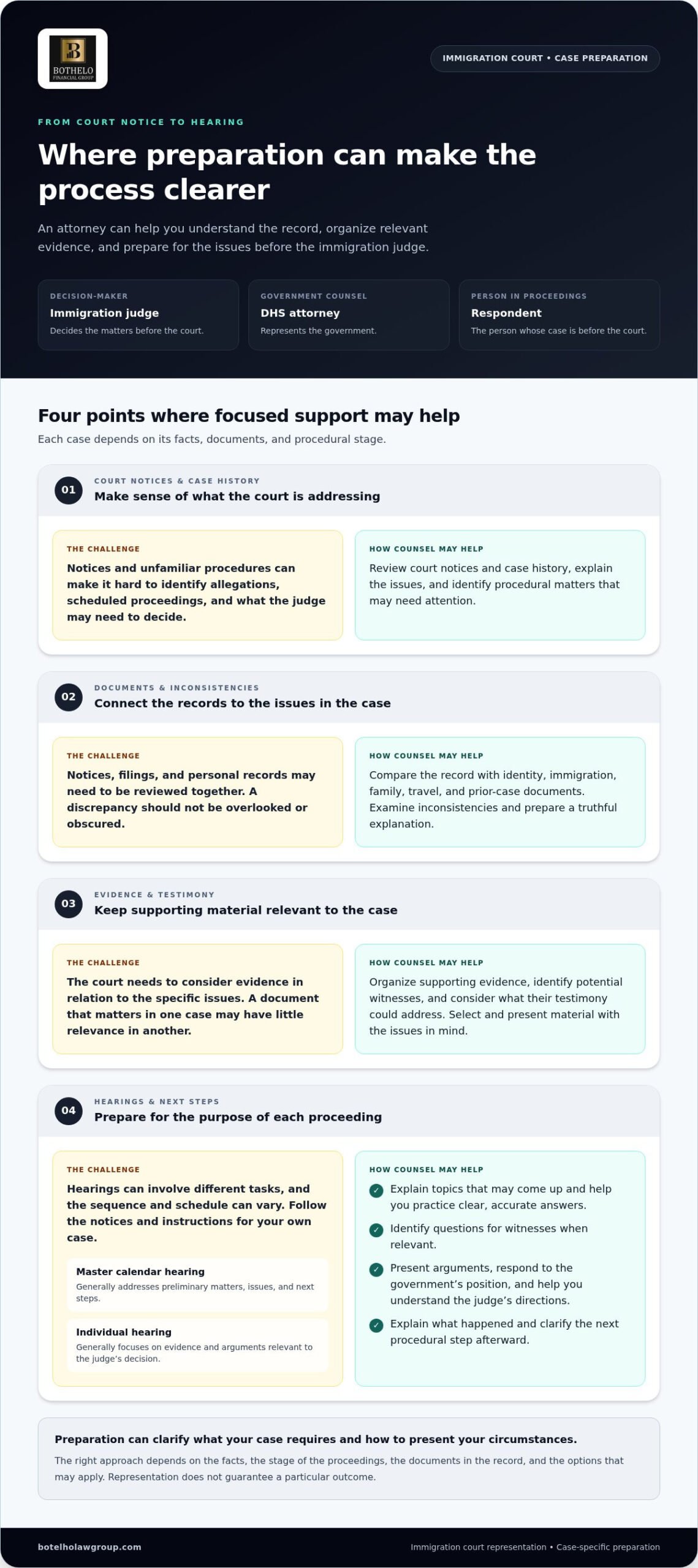
Immigration court representation is legal assistance in proceedings where an immigration judge reviews a person’s case and decides the issues before the court. The judge makes the court’s decisions, while an attorney for the Department of Homeland Security (DHS) represents the government. A person in proceedings is generally called the respondent.
Counsel can help the respondent understand the case, assess available legal options, and address procedural and evidentiary issues. The right approach depends on the facts, the stage of the proceedings, the documents in the record, and the options that may apply. Representation can clarify what is at stake, but no attorney can guarantee a particular decision.
For a general introduction to how immigration courts fit into the U.S. system, see the Immigration Court System Overview. The notices and filings in a person’s case remain central to understanding what the judge will consider.
How immigration court differs from a USCIS application
Read each court notice carefully and keep copies of filings and related correspondence. Together, these materials can help identify the allegations, scheduled proceedings, and matters the judge may need to decide. For local immigration guidance, visit the firm’s Fall River immigration lawyer overview.
Who may be involved in a removal case
The respondent is the person whose case is before the court. The immigration judge presides and decides the matters presented, while DHS government counsel represents the government. If the respondent has an attorney, that lawyer can explain the case, prepare filings, and present arguments and evidence.
An interpreter may be relevant when someone needs language assistance, and witnesses may be involved when their testimony supports an issue in the case. Their roles and whether they are needed depend on the circumstances and applicable court procedures. Each person’s status, case history, and possible legal options can differ, so another respondent’s experience may not predict what will happen in your case.
What an immigration court attorney does before and during hearings
An attorney’s work starts before the hearing. Counsel reviews court notices, the respondent’s case history, available evidence, and procedural issues that may affect how the matter proceeds. This review helps identify information that needs clarification, relevant records, and steps to address before appearing in court.
An immigration court attorney prepares by reviewing the case record, organizing relevant evidence, and helping the client understand and address the issues before the court. The work is tailored to the facts and procedural stage of the case. Representation can help a client prepare and present their position, but it cannot guarantee a particular decision.
Preparing the case record and legal arguments
Counsel may compare court notices and filings with identity, immigration, family, travel, and prior-case records. The goal is to understand how the documents relate to the issues before the judge. If records appear inconsistent, an attorney can help examine the discrepancy and prepare a truthful explanation rather than overlook or obscure it.
Preparation may also involve organizing supporting evidence, identifying potential witnesses, and considering what their testimony could address. Legal arguments and requests to the court depend on the case-specific facts and applicable law. A document that matters in one case may have little relevance in another, so evidence should be selected and presented with the specific issues in mind.
Representation at master calendar and individual hearings
Some cases include a master calendar hearing, which generally addresses preliminary matters such as identifying issues and setting or confirming next steps. An individual hearing generally focuses on the evidence and arguments relevant to the judge’s decision. The sequence, purpose, and schedule can vary, so follow the notices and instructions for your own case.
Before a hearing, counsel can explain topics that may come up, help you practice answering questions clearly and accurately, and identify questions for witnesses when relevant. During proceedings, an attorney may present arguments, respond to the government’s position, and help you understand directions from the judge. Afterward, counsel can explain what happened and clarify the next procedural step.
Preparation should account for the record already filed, unresolved issues, and your communication needs. If you need help assessing your case and preparing for court, you can discuss your circumstances with Botelho Law Group.
How to evaluate immigration court representation for your circumstances
The level of support that may be useful depends on your case, not simply on whether a hearing is scheduled. Consider the complexity of the issues, your case’s procedural stage, the evidence you need to present, and whether you need help understanding court communications or preparing for testimony. A self-represented person handles their own case. Working with counsel may provide legal analysis and support with preparation and court appearances. Neither path guarantees a particular outcome.
Pay close attention to deadlines and filing instructions. Court notices can identify dates and required next steps, and missing a deadline or misunderstanding an instruction can affect how a case proceeds. Review each notice carefully and seek case-specific guidance promptly if a date, filing, or requirement is unclear.
| Path | Possible support | Responsibilities to keep in mind |
|---|---|---|
| Represented | Counsel may assess the case, help prepare filings and evidence, explain proceedings, and present arguments. | You still need to provide accurate information, share relevant records, participate in preparation, and follow instructions about hearings and deadlines. |
| Self-represented | You can review notices, organize documents, and present your own position to the court. | You are responsible for understanding applicable procedures, preparing and submitting materials, and communicating with the court and government counsel. |
Questions that clarify the scope of representation
Before proceeding, understand who will handle filings, help you prepare for hearings, and explain developments in the case. Clarify which documents you need to provide, how you’ll participate in preparation, and how updates will be communicated. Botelho Law Group provides immigration guidance tailored to each client’s circumstances.
When a case may need closer legal analysis
Some circumstances call for careful review, including a complicated procedural history, a prior court order, disputed facts, or questions about possible forms of relief. These factors do not establish eligibility or determine what options are available. The answer depends on the full record and applicable law. For context on potential defense options, see the firm’s deportation defense lawyer guide.
Immigration court representation should match the issues and stage of your case. If you need help understanding what your notices require or how to prepare, discuss your circumstances with Botelho Law Group.
How to prepare for an immigration court case in Massachusetts
Start with the court’s notices. An organized record helps you understand what is scheduled and gives counsel a clearer picture of your history and the issues in your case. Use this sequence to prepare:
- Review every court notice and record each deadline. Note hearing dates, appearance instructions, filing dates, and directions about documents. Keep the original notices and make a separate list of questions or unclear instructions.
- Confirm the hearing details. Check the latest notice for the date, location, and appearance instructions. If you receive an update, do not rely on an older notice. Venue and requirements depend on your individual case, so verify them against current court information.
- Gather relevant records. Collect identity documents, immigration applications and decisions, family records, travel history, and documents from any prior immigration case. Include supporting records related to the issues in your matter.
- Build a clear timeline. List key entries, applications, hearings, filings, and other significant events in date order. If you don’t know an exact date, mark it as approximate rather than guessing.
- Preserve copies and share the full history. Keep clear copies of documents and organize them by type or date. Give counsel complete information, including facts that may be difficult or unfavorable. Don’t alter records or leave out details. Accurate context allows the case to be assessed responsibly.
Documents and details to organize before a consultation
Useful examples include court notices, prior applications, identity records, immigration decisions, travel documents, and relevant family or supporting records. The right documents depend on the matter. Keep papers in their original form when possible, and label copies with what each document is and when it was created. A timeline can help connect records to important events.
Getting ready for a hearing in or connected to Massachusetts
Massachusetts residents should not assume that every case uses the same venue, hearing format, or filing instructions. Confirm the details on the most current court notice and follow the instructions for your case. Botelho Law Group is headquartered in Fall River and represents immigration clients nationwide, including people navigating proceedings connected to Massachusetts.
Organized records and prompt attention to notices can make it easier to discuss your case. For focused guidance on immigration court representation and your next steps, discuss your circumstances with Botelho Law Group.
How Botelho Law Group can guide you through immigration court representation
Immigration court proceedings call for guidance grounded in your record, the issues before the court, and the current stage of your case. Botelho Law Group handles immigration matters, including deportation defense, and represents immigration clients nationwide. Headquartered in Fall River, Massachusetts, the firm provides focused guidance to clients in Massachusetts and across the United States.
Representation is tailored to each case. Reviewing a notice, prior filings, immigration history, and supporting documents can help clarify which questions need attention and what steps may be available. This process does not assure a particular decision or outcome. Its purpose is to help you understand your circumstances and prepare for your case with informed, case-specific guidance.
What to expect when discussing your immigration court matter
A useful first discussion begins with the facts you already have. Be prepared to summarize:
- Your next hearing date and any appearance instructions shown on court notices.
- The notices or other correspondence you have received, including dates and stated deadlines.
- Your immigration history, such as prior applications, proceedings, or court decisions.
- Questions or concerns about the case that you want addressed.
Bring copies of relevant records if available, and explain the history as accurately and completely as you can. A focused discussion can help identify missing information, points that need clarification, and next steps that may warrant attention. You don’t need to have every answer organized before raising your concerns.
Take a timely next step with focused legal guidance
Do not ignore a court notice or assume a deadline can be extended. Review the instructions you received and act promptly if a date or requirement is unclear. Timely attention gives you an opportunity to understand the issue and consider how to proceed, rather than leaving important questions until the hearing is near.
Whether you live in Massachusetts or elsewhere in the United States, you can discuss your immigration court matter with Botelho Law Group. Share your notices, upcoming hearing information, and a concise account of your immigration history so the discussion can focus on your circumstances and possible next steps. No two cases are identical, and guidance should reflect your record rather than assumptions about what a court will decide.
Discuss your immigration court matter
Take the Next Step With a Clear Plan
Immigration court representation can help you understand the issues in your case, prepare relevant records, and approach hearings with a clearer plan. Your notices, deadlines, procedural history, and evidence all matter, so organize what you have and seek guidance if an instruction is unclear. Careful preparation cannot assure a particular outcome, but it can help you make informed decisions about the steps ahead.
Botelho Law Group handles immigration matters, including deportation defense, for clients across all 50 states. Headquartered in Fall River, Massachusetts, the firm provides focused guidance based on each client’s circumstances. A timely discussion can help clarify which questions need attention and what information may be useful in understanding your case.
Don’t let uncertainty keep you from taking a practical next step. Discuss your immigration court matter with Botelho Law Group and move forward with greater clarity and support.
Frequently Asked Questions
Can I represent myself in immigration court?
Self-representation may be possible, but each case and its procedural demands are different. You may need to understand court notices, meet applicable deadlines, organize evidence, and present your position to the judge. The issues, procedural history, and available legal options can affect how much preparation is required. Review your notices carefully, and consider seeking legal guidance if you’re unsure what a filing or court instruction means.
What happens at an immigration court hearing?
The hearing’s purpose depends on the stage of your case. A preliminary or scheduling hearing may address issues and next steps, while a merits hearing generally focuses on evidence and arguments. Not every case follows the same sequence. Check your court notice for the hearing date, location, and instructions, and bring relevant records. If anything is unclear, seek case-specific guidance rather than relying on another person’s experience.
How can an immigration lawyer help in court?
An immigration lawyer can review your notices, case history, and evidence; identify procedural questions; and help organize relevant records. Counsel may prepare filings, help you understand hearing questions, and present arguments or evidence to the court. The support depends on your circumstances and the stage of the case. Immigration court representation can help you prepare and understand your options, but it cannot guarantee a particular decision.
What should I bring to an immigration court attorney consultation?
Bring court notices, prior immigration applications or decisions, identity and travel records, and documents related to your family or the issues in your case. A timeline of entries, filings, hearings, and significant events can help explain your history. Include questions you want answered and note any deadlines shown on notices. Keep copies organized, and share complete, accurate information, including facts that may be difficult to discuss.
Can an immigration court hearing be moved or rescheduled?
A hearing may be changed only under applicable procedures and based on the circumstances of the case. A request does not mean a new date is assured. Requirements can depend on current court rules, the reason for the request, and the case’s posture. Do not assume a deadline can be extended or skip a scheduled hearing. Review current instructions for your case and seek legal guidance promptly before taking action.
How long does an immigration court case take?
There is no single timeline for every immigration court case. The duration can depend on the issues involved, procedural stage, hearing schedule, filings, and other case-specific circumstances. A continuance or additional proceedings may also affect timing. Review each notice for your next scheduled step, keep track of deadlines, and ask counsel to explain what the current schedule means for your case. Avoid relying on estimates from unrelated cases.
Can Botelho Law Group represent someone outside Massachusetts in immigration court?
Yes. Botelho Law Group represents immigration clients in all 50 states and is headquartered in Fall River, Massachusetts. The firm handles immigration matters, including deportation defense. The details of representation depend on the individual case, its procedural stage, and the issues involved. Share your notices, upcoming hearing information, and relevant immigration history so the firm can understand your circumstances and discuss possible next steps without promising a particular outcome.