
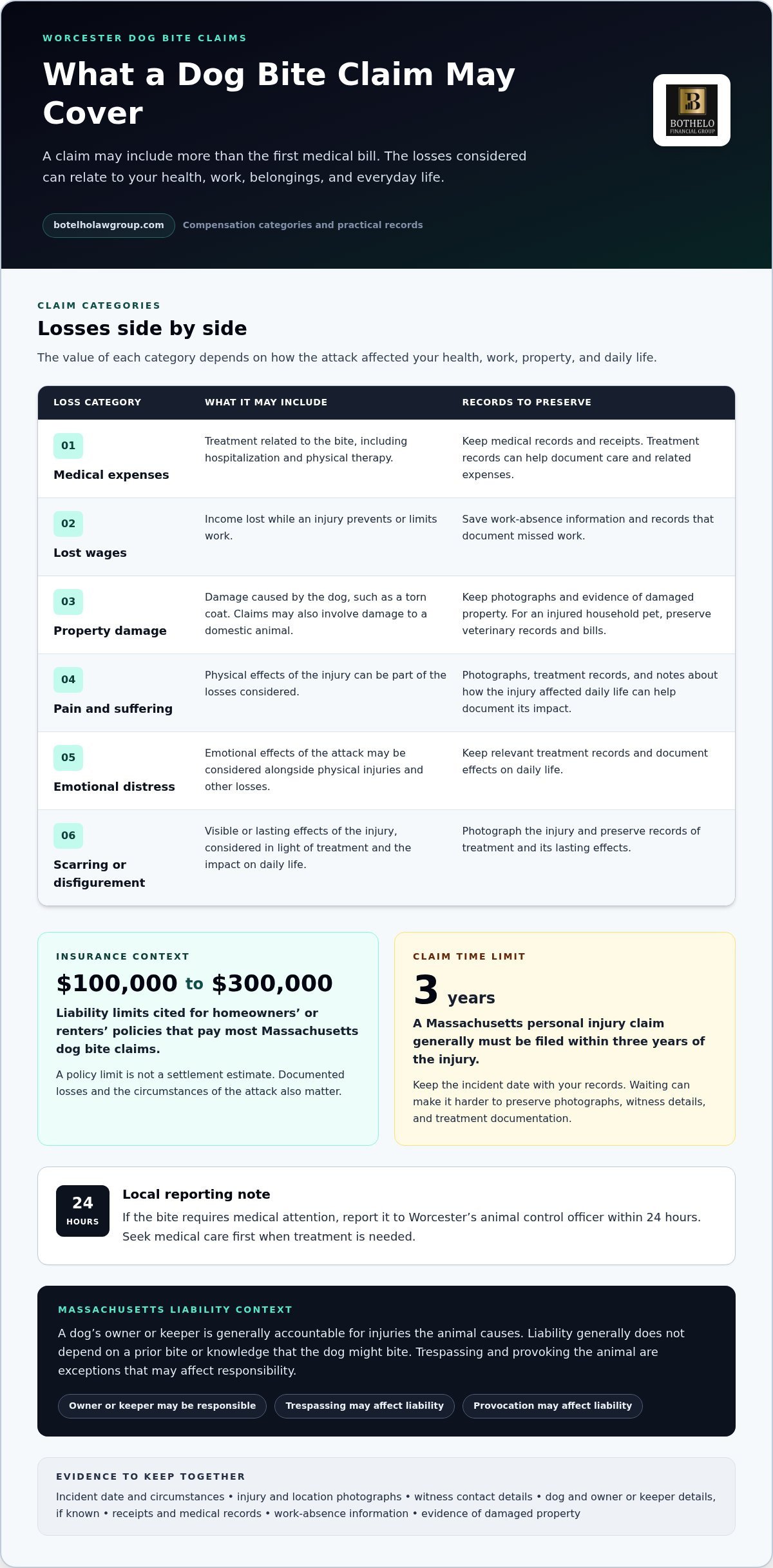
A dog bite claim in Worcester may cover medical expenses, lost wages, property damage, pain and suffering, emotional distress, and scarring or disfigurement. A personal injury claim generally must be filed within three years of the incident, according to the Massachusetts Legislature. A dog bite attorney in Worcester, MA can help assess how the injury and its lasting effects fit into a claim.
The physical injury is only part of a dog bite claim. Treatment needs, missed work, visible scarring, and emotional effects can all shape potential compensation, while available insurance coverage may affect recovery.
This article explains what damages a Worcester dog bite claim may include, how attorney fees work, and which facts can influence a settlement. It also covers how scarring and disfigurement may be considered, helping you understand the issues before deciding on your next step.
Key Takeaways
- Identify claimable losses, which can include treatment costs, lost wages, property damage, emotional distress, and scarring.
- Massachusetts applies strict liability to dog-caused injuries, with liability addressed by Section 155 of the state’s General Laws, according to the Massachusetts Legislature.
- Assess settlement factors such as injury severity, treatment needs, lasting effects, and the available insurance coverage.
- Document scar-related impacts, including treatment and effects on daily life, to help show how the injury has affected you.
- When evaluating legal representation, look for clear guidance on case preparation, communication, and how attorney fees are handled.
What Compensation Is Available in a Dog Bite Claim?
A Worcester dog bite claim may seek compensation for more than an emergency-room visit. Recoverable losses can include medical expenses, lost wages, property damage, pain and suffering, emotional distress, and disfigurement or scarring. The value of each category depends on how the attack affected your health, work, belongings, and daily life. A torn coat, for example, is a different kind of loss from ongoing treatment for a serious wound.
In Massachusetts, a dog’s owner or the person responsible for its care is generally accountable for injuries the animal causes. That person might be a dog walker or family friend caring for the dog during the attack. Liability generally does not depend on whether the dog had bitten someone before or whether its keeper knew it might bite. Trespassing and provoking the animal are exceptions that may affect responsibility.
If the bite requires medical attention, report it to Worcester’s animal control officer within 24 hours. This is the local animal-control official to contact about a report; seek medical care first when treatment is needed.
Preserve evidence soon after the attack, while details are clear. Photograph the injury and location, record the date and circumstances, and save witnesses’ contact details. Note the dog’s identifying details and the owner’s or keeper’s name, if known. Keep receipts, medical records, work-absence information, and evidence of damaged property. These records help connect specific losses to the incident.
Dog bites can cause puncture wounds, lacerations, bruising, fractures, nerve damage, and permanent scarring. A puncture may need medical attention even when the skin opening appears small. Infection is also a concern if the dog is not properly vaccinated. Treatment records can document care such as hospitalization or physical therapy and help explain related expenses and time away from work.
- Medical expenses: Treatment, hospitalization, and physical therapy related to the bite.
- Lost wages: Income lost while an injury prevents or limits work.
- Other losses: Damaged property, pain and suffering, emotional distress, and scarring.
Insurance can be relevant to payment. Homeowners’ or renters’ policies that pay most Massachusetts dog bite claims typically have liability limits ranging from $100,000 to $300,000. A policy limit is not a settlement estimate; documented losses and the circumstances of the attack also matter.
Time limits matter in Worcester personal injury claims. Under Massachusetts law, a personal injury claim generally must be filed within three years of the injury. Keep the incident date with your records and discuss how the deadline applies during a legal consultation. Waiting can make it harder to preserve photographs, witness details, and treatment documentation.
How much does a Worcester dog bite lawyer cost?
There’s no single cost that applies to every Worcester dog bite case. A lawyer’s fee depends on the case and is given after a quote request; factors include the work required, disputed liability, and evidence that must be developed. Before agreeing to representation, review the written fee terms and ask how case expenses, such as obtaining records, are handled. Clear terms help you understand what you may owe and when.
Massachusetts applies strict liability to dog-caused injuries, with liability addressed by Section 155 of the state’s General Laws, according to the Massachusetts Legislature. This rule generally makes a dog’s owner or keeper responsible for damage caused by the animal. A keeper is someone charged with the dog’s care, such as a person watching it. The law does not generally require proof that the dog previously bit someone or that its owner knew it might bite.
To recover compensation, an injured person generally needs to show that the defendant owned or kept the dog, the dog caused the injury, and the injury resulted in losses. Medical records, photographs, witness accounts, and expense documentation can help connect the attack to the harm claimed. The injured person’s conduct also matters because Massachusetts law recognizes exceptions to liability.
Two key exceptions involve trespassing and provoking the animal. Evidence that someone entered property unlawfully or deliberately provoked a dog, for example, could affect whether the owner or keeper is liable. The circumstances matter: an accidental movement near a dog is not automatically the same as intentional provocation. Preserve relevant messages, witness names, and photographs so the events can be assessed accurately.
Massachusetts dog-owner liability can also apply when an attack injures another person’s property. Section 155 addresses damage to a person or property, including injuries to domestic animals. A dog that injures a household pet may therefore raise different proof and loss issues than an attack on a person. Keep veterinary records, bills, and photographs that document the animal’s injury and treatment.
If the dog’s owner or keeper is a minor, a parent or guardian may be liable under Massachusetts law. Identifying the responsible adult and the person actually caring for the dog can help clarify who may face a claim. A dog walker, family friend, or other caretaker may be relevant if that person had charge of the animal when the attack occurred.
Before deciding on representation, organize the incident timeline, injury records, and evidence showing who controlled the dog. Ask a lawyer to explain the fee arrangement, what work it covers, and how case expenses are treated. These details help you understand the proposed terms and the needs of your claim.
What Settlement Amount Can I Expect to Get in My Worcester Dog Bite Case?
No single settlement figure applies to every Worcester dog attack. The reported U.S. average cost per dog bite claim is approximately $69,300, but that figure is not a prediction of an individual settlement.
Factors Affecting Settlement Amounts
Start with the documented effects of the injury. Treatment records, time away from work, lasting pain, and visible scarring help show how the attack changed daily life. The victim’s age and the type of dog can also affect injury severity. A facial injury that leaves a lasting scar, for example, raises different damages questions from a wound that heals without lasting effects.
Massachusetts also applies modified comparative negligence. A claimant found 51% or more at fault may recover nothing. Evidence about the events leading to the bite can therefore affect settlement negotiations. Preserve witness accounts, photographs, and relevant records that clarify what happened, including whether the dog was provoked or the injured person was trespassing.
Insurance coverage is another practical consideration. Homeowners’ or renters’ policies that pay most Massachusetts dog bite claims typically have liability limits ranging from $100,000 to $300,000. The policy limit can shape available funds, but it does not establish the value of the injury. A serious claim still needs evidence connecting the attack to specific losses and lasting consequences.
- Injury: Document diagnosis, treatment, recovery, and lasting effects.
- Responsibility: Preserve evidence that clarifies how the attack occurred.
- Coverage: Consider the applicable policy alongside the documented losses.
Insurance Settlement Negotiations
Settlement negotiations typically turn on evidence of liability, injury, and losses. Organize medical records, wage information, photographs, and receipts into a clear timeline. An insurer may review each item when evaluating a demand. Missing records or unexplained gaps can make it harder to show how the dog attack caused a particular expense or limitation.
Review any proposed settlement against current losses and documented future needs. A claim involving continuing treatment, for example, requires different supporting evidence from one involving completed care. Compare the offer with available policy coverage, the strength of liability evidence, and the injury’s lasting effects. A dog bite attorney can use the evidence and applicable law to present a well-supported claim.
Before accepting an offer, understand what the settlement resolves. A signed release can end the claim, even if concerns arise later. Ask how the amount accounts for treatment, missed work, and permanent effects, then compare those terms with your records. Careful review keeps the decision grounded in the specific evidence rather than an isolated average or headline result.
Scarring and disfigurement
A dog bite scar can remain after the wound closes, changing a person’s appearance and daily routines. In a Worcester personal injury claim, disfigurement and scarring may be considered alongside medical expenses, pain, and emotional distress. The relevant question is not simply whether a mark exists. Evidence should show where the scar is, how it developed, and how it affects the person bitten.
Facial and neck scarring can be especially consequential for children. Their smaller stature can make their faces or necks more vulnerable during dog attacks. A visible scar may affect a child’s comfort at school, in photographs, or around other people. Describe those effects accurately, without assuming every child has the same emotional response.
Document the injury as it heals. Take clear photographs of the bite and resulting scar, preserve images from different stages, and keep medical records describing treatment and recovery. Dated photos help show how the injury changed, while treatment notes explain the care provided. Keep records of follow-up appointments and any recommended care related to the scar.
Scarring can have physical effects beyond appearance. A scar near a joint, for example, may affect movement, while an injury near the face may cause discomfort during ordinary activities. Describe specific limitations and when they occur. If a scar causes emotional distress, note concrete examples, such as avoiding social photographs or feeling anxious in situations that recall the attack.
A Massachusetts dog bite claim may include compensation for disfigurement, scarring, pain and suffering, and emotional distress. The evidence must connect the claimed harm to the attack. Medical documentation, photographs, and personal accounts can each support a different part of that explanation. A claim involving a child’s facial scar, for instance, may need evidence of both the visible injury and its effect on the child’s routine.
- Photographs: Preserve clear images showing the injury and scar as they change.
- Medical records: Keep treatment notes and records of scar-related care.
- Impact: Record specific physical, social, or emotional effects caused by the injury.
Do not rely on one photograph or a brief description to explain a lasting scar. A consistent record gives a clearer account of the injury’s course and impact. For a child, parents or guardians can preserve photographs, note changes in daily activities, and keep relevant school or treatment communications. Those details help explain why the harm matters beyond the scar’s appearance.
A dog bite claim should account for the full injury, including lasting disfigurement. Organized records help distinguish a temporary wound from a scar with continuing effects. They also help describe emotional and practical consequences in concrete terms, rather than leaving the impact of the attack unexplained.
Finding a Worcester dog-bite attorney
Choose a lawyer who can explain how Massachusetts dog bite law applies to your evidence, rather than simply promising a large result. A useful evaluation focuses on relevant case experience, communication, evidence strategy, and a clear explanation of fees and next steps.
Massachusetts applies strict liability to dog-caused injuries under Section 155 of the General Laws, according to the Massachusetts Legislature. Ask how a lawyer would assess ownership or care of the dog, the cause of the injury, and possible exceptions. Trespassing or provoking the animal may affect liability, so the specific account of the attack matters.
When comparing Worcester dog bite attorneys, consider relevant experience, client reviews, and descriptions of past case results. Look for details about injury severity, disputed responsibility, and the evidence involved, rather than comparing headline amounts alone. Reviews can reveal patterns in communication, but focus on specific comments that relate to your priorities.
Ask how the lawyer would organize records for your particular claim. A case involving a child’s facial injury, for example, may require careful medical documentation and evidence of lasting effects. The American Veterinary Medical Association identifies children as the most common dog-bite victims and says they are more likely to suffer severe injuries. A lawyer should explain how those facts relate to your claim without assuming every child’s case is alike.
Use an initial consultation to discuss the practical work involved. Bring the incident timeline, treatment records, photographs, witness details, and information about the dog’s owner or keeper. Ask who will handle communication, how evidence will be gathered, how settlement negotiations are approached, and how you will receive updates. Clear answers make it easier to assess whether the lawyer’s approach fits your needs.
- Relevant experience: Ask about dog-bite claims and issues like disputed responsibility or lasting injury.
- Communication: Clarify who answers questions and how case updates are provided.
- Results: Compare case details and circumstances, not settlement figures in isolation.
- Fees: Review the written agreement and how case expenses are treated.
Before deciding, consider whether the lawyer explains both strengths and difficult issues, including evidence of trespassing or provocation. A grounded discussion should connect the facts to Massachusetts law and identify what documentation could support your position. If you’re ready to discuss representation for a dog-bite injury, contact a personal injury attorney to review the matter.
Botelho Law Group: Estate Planning and Asset Protection
Botelho Law Group handles personal injury litigation for people pursuing claims after dog attacks in Massachusetts. If you are weighing evidence, communicating with an insurer, or assessing how an injury has affected your life, legal representation can help you understand the claim process and organize the issues that need attention.
Botelho Law Group also handles Estate Planning and Asset Protection, a separate service for people addressing future planning needs. For a Worcester dog bite matter, the relevant next step is to discuss the injury claim, available documentation, and questions about potential compensation. Bring records that help explain what happened and how the injury affected you.
Contact Botelho Law Group to discuss your personal injury matter.
Take the Next Step With a Clear Plan
The next decision is how to move forward with the evidence and questions specific to your situation. A dog bite attorney in Worcester, MA can help assess the issues, explain the legal process, and clarify what information may support your claim. Prepare a concise timeline and note any concerns about treatment, work, or lasting effects before discussing your options.
Botelho Law Group handles personal injury litigation in Massachusetts. A conversation can help you understand whether legal representation fits your needs and what steps may follow. If your immediate priority is organizing records or understanding the process, bring those questions forward rather than waiting until every detail feels settled.
Contact Botelho Law Group today to discuss your situation. Taking a deliberate next step can help you approach the claim with greater clarity.
Frequently Asked Questions
Why Are Dog Bite Cases Common in Worcester?
Worcester has public spaces where residents may encounter dogs, including Green Hill Park and Elm Park. Shared paths, neighborhood sidewalks, and outdoor gathering areas bring people and pets into the same spaces. That context helps explain how an unexpected encounter can happen, but it does not establish how frequently bites occur. If an attack happens in a park, note the specific location and nearby landmarks for your records.
Do I need a lawyer for an animal attack in Worcester, MA?
You are not required to hire a lawyer, but legal guidance can help when fault, injury severity, or insurance negotiations are disputed. A claim might involve conflicting witness accounts or questions about who was caring for the dog. A consultation can help you understand the evidence and procedural steps relevant to your circumstances. Consider representation particularly when injuries require ongoing care or affect your ability to work.
Does Massachusetts have a one bite law?
No. Massachusetts does not follow the one-bite rule, so a dog owner’s responsibility generally doesn’t depend on a previous bite or prior knowledge of dangerous behavior. Section 155 of the state’s General Laws addresses liability for injuries caused by dogs. The facts still matter: trespassing or provoking the animal may affect a claim. Preserve evidence that clarifies what happened before and during the attack.
How do I find a dog bite attorney near me?
Look for a Massachusetts lawyer who handles personal injury cases involving dog attacks and can explain how the law applies to your circumstances. Prepare a short account of the incident, the treatment received, and any communication from an insurer. During a consultation, ask who will manage your case, how updates are shared, and what records may be needed. Clear answers help you evaluate the working relationship.
What Types of Damages Are Available After a dog bite attack in Worcester?
A claim may include documented treatment costs, income losses, property damage, pain, emotional distress, and scarring. The evidence should connect each claimed loss to the attack. Keep invoices for damaged belongings and records showing work missed because of appointments or recovery, for example. Counseling records may help explain emotional effects. An organized file makes it easier to present the different ways an injury affected you.
What happens if a dog bites you in Massachusetts?
Get medical attention for injuries that need care, then report the incident to the appropriate local animal-control officer if medical attention was required. Keep the dog’s identifying details and vaccination information, if available, along with the owner’s or keeper’s contact information. Write down witness names and preserve any incident-report details. These steps create a useful record while you address treatment and consider whether to pursue a claim.
Who Is Responsible for a Dog Bite?
In Massachusetts, responsibility may fall on the dog’s owner or the person charged with caring for the animal when the attack occurred. A dog walker or family friend could be relevant if that person had charge of the dog. If the owner or keeper is a minor, a parent or guardian may be liable. Trespassing and provoking the animal are exceptions that can affect responsibility.
Who are the top-rated dog bite attorneys in Worcester, MA?
There is not enough information to rank Worcester attorneys by rating. Instead, compare relevant dog bite experience, detailed client feedback, and how clearly each lawyer explains case strategy and communication. Treat a reported result as one example, not a forecast for your claim, since facts and injuries differ. Ask how the lawyer would approach the specific evidence in your case before choosing representation.