
An interview notice does not mean you have to prepare alone. A USCIS interview lawyer can review your application, organize supporting records, help you prepare for the officer’s questions, and represent you at the interview. Applicants generally are not required to hire an attorney, but legal guidance may help when a case raises concerns.
Receiving a notice can feel stressful when your immigration future depends on clear, accurate answers. This guide explains what to expect at a USCIS interview, how preparation differs for naturalization, family-based, and employment-based cases, and when legal representation may help. You’ll also learn how an attorney can review your filing and supporting evidence so you can better understand the process and prepare for your next steps.
Key Takeaways
- Use your interview notice to confirm the appointment details and documents USCIS expects you to bring.
- Compare your application with your supporting records so you can address inconsistencies clearly and accurately.
- Prepare for the interview format that applies to your case, including the naturalization tests when required.
- Consider legal representation if your immigration history, application, or family or employment circumstances raise complex questions.
What Happens During a USCIS Naturalization Interview?
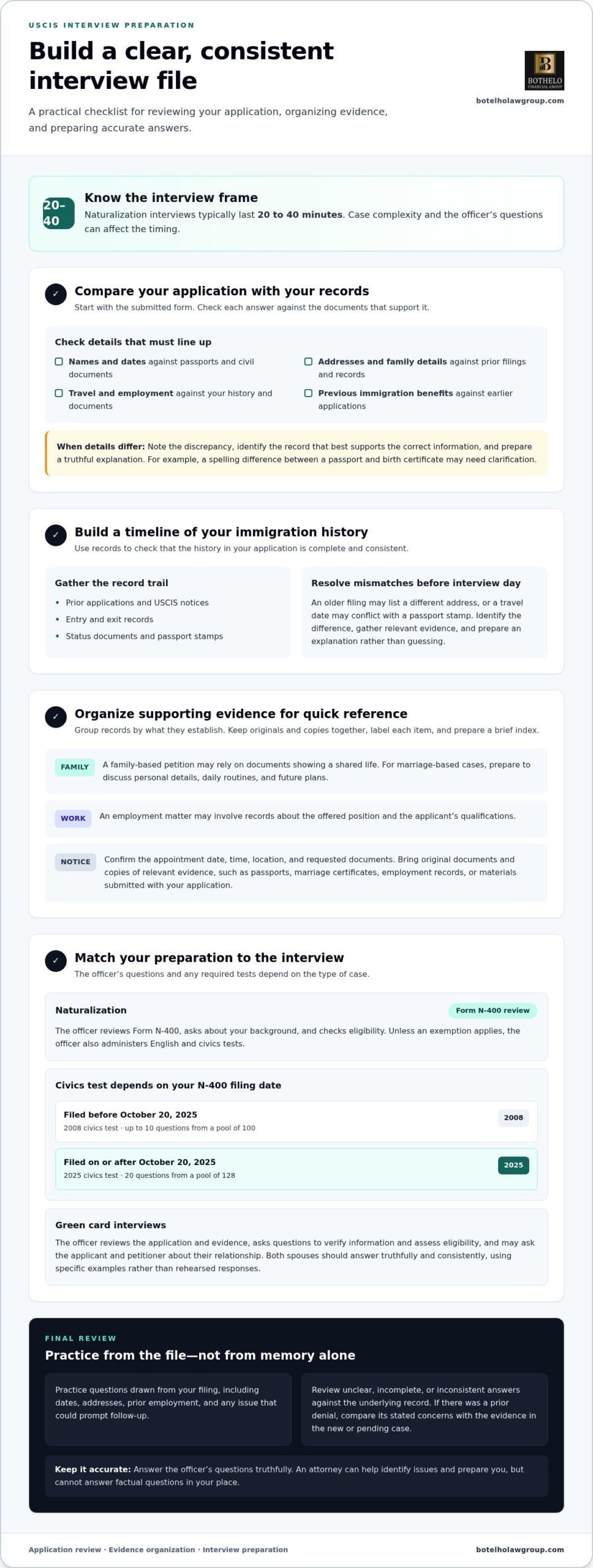
A USCIS officer reviews your Form N-400, asks questions about your background, and checks your eligibility for naturalization. Unless an exemption applies, the officer also administers English and civics tests. Interviews typically last 20 to 40 minutes, though case complexity and the officer’s questions affect the timing.
Your filing date determines which civics test applies. According to U.S. Citizenship and Immigration Services, applicants who filed Form N-400 before October 20, 2025, take the 2008 civics test, which asks up to 10 questions from a pool of 100. Applicants who filed on or after October 20, 2025, take the 2025 civics test, which draws 20 questions from a pool of 128, according to U.S. Citizenship and Immigration Services.
Prepare by reviewing your submitted N-400, checking each answer against your current records, and practicing English and civics when required. Use the appointment notice to confirm the date, time, location, and requested documents. Bring original documents and copies of relevant evidence, such as passports, marriage certificates, employment records, or materials submitted with your application.
What happens during a USCIS green card interview? A USCIS officer reviews the application and supporting evidence, asks questions to verify information and assess eligibility, and may ask the applicant and petitioner about their relationship. For a marriage-based case, prepare to discuss personal details, daily routines, and future plans. Both spouses should answer truthfully and consistently, using specific examples rather than rehearsed responses.
If you’ve received a notice, begin preparing promptly. Organize your documents, review the application, and note any questions or changes since filing. If you’ve had a prior denial, examine the decision and compare its stated concerns with the evidence in the new or pending case. A practice interview can help identify unclear answers or inconsistencies. An attorney can review your application and help you prepare accurate answers for the USCIS officer.
Reviewing applications and supporting documents
A careful application review compares each answer with the records that support it. Start with the submitted form, then check names, dates, addresses, travel, and family details against passports, prior filings, and civil documents. For example, a spelling difference between a passport and birth certificate may need a clear explanation. Note each discrepancy and identify the record that best supports the correct information.
Review your immigration history just as carefully. Build a timeline using prior applications, entry and exit records, status documents, and USCIS notices. Compare it with every answer about travel, employment, and previous immigration benefits. An older filing may list a different address, or a travel date may conflict with a passport stamp. Identify discrepancies before the interview, gather relevant evidence, and prepare a truthful explanation instead of guessing.
For a green card case, organize records by what they establish. A family-based petition may rely on documents showing a shared life, while an employment matter may involve records about the offered position and the applicant’s qualifications. Keep originals and copies together, label each item, and prepare a brief index. This makes it easier to locate evidence and answer the USCIS officer’s questions directly.
A practice interview can test whether answers match the application and supporting records. Have someone ask questions drawn from the filing, including dates, addresses, prior employment, and any issue that could prompt follow-up. Note answers that are unclear, incomplete, or inconsistent, then review the underlying record before practicing again. An attorney can help identify issues that need legal analysis and explain the applicant’s role when counsel appears at the interview. For a family-based case, family-based green card petitions are closely connected to reviewing the petition and its supporting evidence.
When Is Legal Representation Particularly Important?
Legal counsel may be especially helpful when prior filings, immigration history, or supporting records raise questions. Representation is optional for most USCIS interviews, but your decision should reflect the issues you need to address.
Lawyer Representation at USCIS Interviews
U.S. Citizenship and Immigration Services says an attorney may enter an appearance in a USCIS matter by submitting Form G-28, Notice of Entry of Appearance as Attorney or Accredited Representative. A representative can review the submitted application, prepare the applicant to respond accurately, and attend the interview. The applicant must still answer factual questions truthfully and demonstrate eligibility; counsel cannot testify in the applicant’s place.
To find a qualified immigration lawyer near you, look for an attorney eligible to practice in the United States and in good standing with a state, territory, or District of Columbia bar. Consider whether the lawyer’s immigration work matches your issue, such as naturalization, family immigration, or a prior filing concern.
Risks of Attending Without a Lawyer
Attending without counsel is a choice, not an automatic violation. The practical risk is facing complex questions alone: you may misunderstand a question, give an incomplete response, or struggle to explain differences between your answers and the records. Inconsistencies can complicate the officer’s assessment, so review your application and relevant history carefully before the interview.
A qualified representative can identify issues to prepare for, but cannot answer factual questions for you. A law student or graduate appearing before USCIS must be supervised by a licensed attorney or accredited representative, who must also be listed and sign on Form G-28.
Representation can change during a proceeding. You may change attorneys or accredited representatives, withdraw representation, or decline representation. If USCIS has an appearance notice on record and you choose to attend without your representative, you must submit a written statement confirming that your choice is voluntary.
An accredited representative may also appear before USCIS if accredited by the Department of Justice’s Executive Office for Immigration Review and working for a recognized organization. Be cautious about relying on someone who is not qualified to provide legal representation.
Employment-based and family immigration interviews
In employment-based and family-based green card cases, an interview can examine whether the application and evidence support eligibility. Adjustment-of-status applicants generally must attend an interview unless USCIS determines it can be waived. The notice provides the appointment details, while the application and petition indicate which facts the officer may verify.
In an employment-based case, prepare to explain the role and the information submitted about your qualifications. Review the petition and supporting records together. Check that job details, employment history, and answers about your background are accurate and consistent. If a change or discrepancy needs explanation, identify the relevant record and prepare a clear, truthful response rather than speculating.
A marriage-based green card interview may focus on your relationship and shared life. Be ready to discuss personal details, daily routines, and future plans. Review the submitted forms together and make sure you both understand the information provided. Practice answering in your own words. Repeating identical phrases matters less than giving truthful answers consistent with the facts and evidence.
An attorney can help prepare for questions and attend the interview, but cannot answer factual questions for an applicant. The applicant must testify truthfully and demonstrate eligibility for the requested benefit. Effective May 18, 2026, attorneys cannot appear remotely at USCIS field office interviews except in limited circumstances. Plan representation around the in-person appointment and the issues raised by the case.
If a family-based petition or employment-based matter has an interview notice, review the filing and prepare for the questions it may raise. Discuss your family-based green card petition and interview preparation with an immigration attorney.
Botelho Law Group: Estate Planning and Asset Protection
Botelho Law Group represents individuals pursuing naturalization and citizenship applications and family-based green card petitions. If you’ve received an interview notice, need help reviewing your immigration application, or have concerns about information in a prior filing, the firm can help you prepare and understand the process.
For a family-based case, preparation includes reviewing the petition and evidence relevant to the relationship. For naturalization, reviewing your application can help you prepare to discuss its details at the interview. Botelho Law Group also provides estate planning and asset protection in Massachusetts, a separate service for people addressing future planning and asset concerns.
Contact Botelho Law Group to discuss your immigration matter and possible next steps.
Take the Next Step With a Clear Plan
Your next move should reflect the questions your case raises, not a generic interview checklist. If you’ve received an interview notice or need to review a past filing, a USCIS interview lawyer can assess your records, identify issues to prepare for, and explain what representation may involve. You remain responsible for giving truthful answers, but focused preparation can help you approach the process with greater clarity.
Botelho Law Group handles naturalization and citizenship applications and family-based green card petitions for people seeking immigration guidance. The firm also offers estate planning and asset protection in Massachusetts for separate planning needs. Discuss your circumstances with the firm to clarify what legal support fits your situation and which steps to consider next.
Contact Botelho Law Group to discuss your immigration matter. Take the next step with a clearer plan and informed support.
Frequently Asked Questions
Can You Help if I’ve Already Received an Interview Notice?
Yes. An attorney can review the notice and assess your case before the appointment, even after it arrives. A USCIS interview lawyer may compare your filing with later records, identify issues that need explanation, and help you prepare. Gather the notice, a copy of your application, prior USCIS correspondence, and documents related to changes since filing so your preparation addresses your case’s specific details.
Do I Need a Lawyer for My I-751 Interview?
Not necessarily. You may attend an I-751 interview without an attorney, but representation can help if your petition, relationship evidence, or immigration history raises difficult questions. Organize the I-751 filing, USCIS correspondence, and records that explain relevant changes. For example, documents showing different addresses may need context. A lawyer can help you identify issues to address and prepare truthful responses.
How Long Does Preparation Take?
Preparation depends on your application and the records that need review, not on a fixed schedule. A complete file may need less review than a case involving prior filings, inconsistent dates, or missing documents. Start when the notice arrives. Gather submitted forms and correspondence, prepare a timeline of key events, and set aside time to review likely questions with counsel before the appointment.
Is an Immigration Attorney Required?
No. USCIS applicants generally are not required to hire an attorney for an interview. You can choose whether to proceed alone or have qualified counsel represent you. Consider the complexity of your immigration history, any conflicting records, and concerns raised by an earlier decision. Representation can provide legal analysis, while you remain responsible for answering factual questions about your circumstances.
What Can an Attorney Do During the Interview?
An attorney can attend the interview as your representative and provide legal counsel, but cannot answer factual questions for you. You must explain your own travel, employment, or family history to the USCIS officer. Before the appointment, discuss how your attorney will participate and which records may be relevant. Bring the materials you reviewed together so you can refer to them if needed.
What if I’ve Been Denied Before?
Start with the written denial rather than assuming your next application will follow the same course. Identify the stated reason and compare it with the application and evidence submitted. Note whether the decision refers to eligibility, missing records, or inconsistent answers. An immigration attorney can assess how the decision affects your options and help organize a response or future filing. Keep the denial notice and related USCIS correspondence together.