
Could a rushed statement or a missed deadline affect your injury claim? After an accident, it’s understandable to be unsure what to document, when to seek medical care, or how to respond to an insurer. The personal injury claim process Massachusetts residents face involves practical decisions, and early steps can affect how a claim is evaluated.
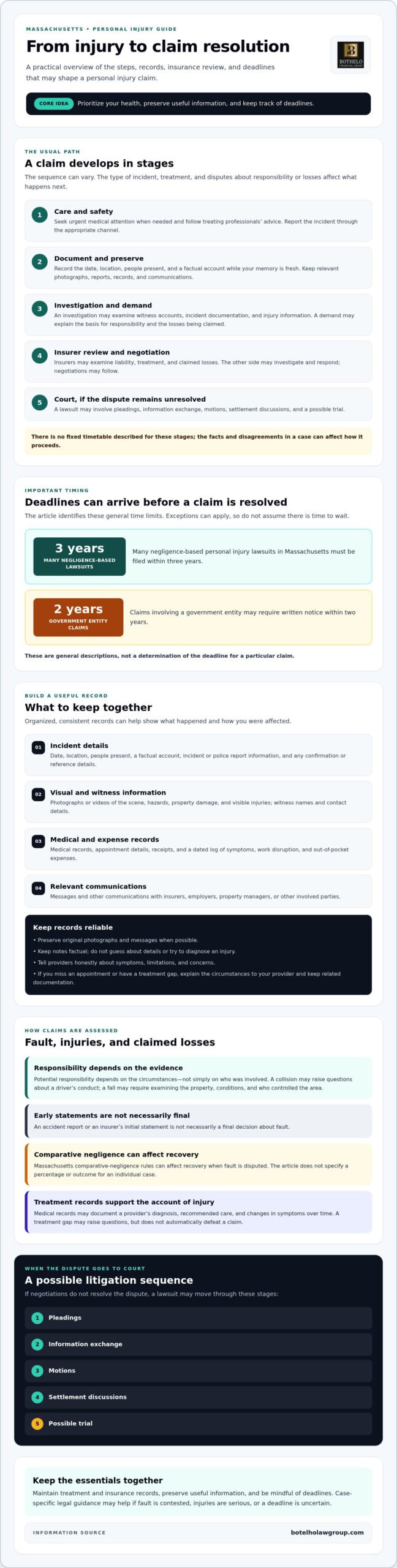
This guide walks through the usual path, from medical care and evidence gathering to insurance negotiations and, when necessary, a lawsuit. Many negligence-based personal injury lawsuits in Massachusetts must be filed within three years, while claims involving a government entity may require written notice within two years. Exceptions can apply, so don’t assume you have time to wait.
You’ll learn what records may support a claim, how fault and insurer communications can affect it, and what to expect if negotiations don’t resolve the dispute. The aim is to help you understand the sequence, preserve useful information, and recognize when case-specific legal guidance may help.
Key Takeaways
- The personal injury claim process Massachusetts claimants follow typically moves from documenting the incident and injuries to insurer review, negotiation, and, in some cases, litigation.
- Organize photographs, witness details, incident reports, medical records, and relevant communications to help show what happened and how you were affected.
- Insurers may examine liability, treatment, and claimed losses. Massachusetts comparative-negligence rules can affect recovery when fault is disputed.
- If a dispute proceeds to court, the case may involve pleadings, information exchange, motions, settlement discussions, and a possible trial.
- Keep treatment and insurance records together. Consider case-specific legal guidance if fault is contested, injuries are serious, or you’re unsure about a deadline.
How the Massachusetts Personal Injury Claim Process Begins
An injury can leave you managing medical care, missed work, and insurance questions all at once. Start with your health, then take practical steps to preserve information about what happened. A personal injury claim is a request for compensation based on another party’s alleged legal responsibility for an injury. The facts, injuries, parties involved, and applicable law all shape how the claim develops.
The personal injury claim process Massachusetts residents may encounter generally involves medical care, documentation, investigation, a demand for compensation, and negotiation. If the parties can’t resolve the dispute, litigation may follow. The stages don’t follow a fixed timetable. The type of incident, course of treatment, and disagreements about responsibility or losses can all affect what happens next.
What should you do immediately after an injury in Massachusetts?
Prioritize urgent medical attention and follow the advice of treating professionals. Report the incident through the appropriate channel, such as a police department, property manager, or employer, depending on what happened. Keep any confirmation or reference details you receive. While your memory is fresh, write down the date, location, people present, and a factual account. If you’re unsure about a detail, don’t guess.
Who may be responsible for an injury claim?
Potential responsibility depends on the evidence and circumstances, not simply on who was involved. A collision may raise questions about a driver’s conduct. A fall may require examining the property, the conditions, and who controlled the area. A business or another party may also warrant review. An accident report or an insurer’s initial statement isn’t necessarily a final decision about fault.
As the claim develops, preserve useful records and avoid altering original photographs or messages. Depending on the facts, an investigation may examine witness accounts, incident documentation, and information about the injury. A demand may then explain the basis for responsibility and the losses being claimed. The other side may investigate and respond, leading to negotiations or, if the dispute remains unresolved, a lawsuit.
If a lawsuit becomes necessary, it proceeds through the appropriate courts and applicable procedures. The Massachusetts court system includes different court departments, and where a case belongs depends on the matter. The next sections explain how evidence and medical records can support a claim and what to expect as insurers assess fault and settlement.
How Evidence and Medical Records Move a Massachusetts Claim Forward
Evidence helps establish what happened, which injuries were reported, and what treatment followed. Clear, consistent records can help insurers and other parties evaluate a claim. Some information may disappear or become harder to obtain over time, so preserve what you have promptly. Ask an attorney about lawful ways to request evidence held by others.
What evidence should you preserve after an accident?
Keep relevant materials in their original form when possible. A simple digital or paper file can help you organize:
- Photographs or videos of the scene, hazards, property damage, and visible injuries.
- Names and contact details for witnesses, along with incident or police report information.
- Medical records, appointment details, receipts, and messages related to the incident or your treatment.
- Communications with insurers, employers, property managers, or other involved parties.
A dated log can track symptoms, appointments, work disruption, and out-of-pocket expenses. Keep entries factual. Note what you experienced and when, rather than trying to diagnose an injury or overstate its effects. Available evidence varies by case. Don’t trespass, access another person’s records, or put yourself at risk to obtain information.
Why do treatment records and follow-up matter?
Medical records can document a provider’s diagnosis, recommended care, and changes in symptoms over time. Attend recommended follow-up appointments when possible, and tell your providers honestly about your symptoms, limitations, and concerns. Accurate reporting supports your care and helps create a reliable record. If you miss an appointment or have a gap in treatment, explain the circumstances to your provider and keep any related documentation. A gap may raise questions, but it doesn’t automatically defeat a claim.
For a motor vehicle injury, keep records of relevant insurance communications and benefits as well. Massachusetts law addresses Personal Injury Protection, or PIP, in its Personal Injury Protection provisions. The details can depend on the incident and coverage, so preserve notices and payment records rather than assuming what applies.
Organized documentation gives you a clearer foundation as the personal injury claim process Massachusetts moves toward investigation and negotiation. If you’re unsure what to preserve or how to request records, consider seeking case-specific personal injury guidance before taking steps that could affect evidence.
How Massachusetts Insurers Evaluate Fault, Injuries, and Settlement Offers
After a claim is reported, an insurer may investigate how the incident occurred, who may be legally responsible, and whether the claimed injuries and losses are supported by available records. The review may include incident reports, statements, photographs, medical documentation, expenses, and time missed from work. Each side may assess the evidence differently, so an insurer’s initial position isn’t necessarily the final word on fault or compensation.
What does an insurance adjuster review?
An adjuster represents the insurer, not the injured claimant. The adjuster may ask questions or request documents to evaluate liability, treatment, and claimed losses. Be truthful and careful in your communications. If you’re unsure of an answer, don’t guess. Before signing a release or broad authorization, understand what it covers and what information it allows the insurer to obtain. Legal advice may help you assess the request in context.
Massachusetts applies modified comparative negligence. A person may recover damages if found less than 51% at fault, but any recovery is reduced by that person’s share of fault. At 51% or more, recovery is barred under this rule. The evidence matters: an initial report or insurer assessment alone doesn’t settle the question. Keep deadlines in view while discussions continue. The general limitation period for many personal injury actions is three years, subject to exceptions and other requirements. Consult the Massachusetts statute of limitations for personal injury and get advice about how a deadline applies to your circumstances.
Should you accept a personal injury settlement offer?
An offer isn’t automatically a fair measure of a claim, and you don’t have to accept an initial offer simply because it was made. Consider documented losses, whether treatment is ongoing, how fault is disputed, and the exact terms of any proposed release. A claim’s settlement value can’t be predicted reliably from a brief description of an injury, though tools like Truck Accident Calculator can help injured individuals evaluate common damage categories after commercial vehicle crashes. The agreement’s language matters because it generally resolves the claims it identifies.
| Claim document or step | What it generally means |
|---|---|
| Demand | A request for compensation that explains the claim and supporting basis. |
| Insurer response | The insurer’s position, questions, or response to the demand. |
| Settlement offer | A proposed payment in exchange for resolving specified claims. |
| Release | A legal document stating which claims are settled or relinquished. |
Read the proposed terms carefully before signing. The personal injury claim process Massachusetts claimants experience can turn on disputed facts and the scope of a release, not just the amount offered. A case-specific review can help clarify what the offer resolves and what options may remain.
When a Massachusetts Injury Claim May Become a Lawsuit
A claim may proceed to court if the parties can’t resolve disagreements about responsibility, the extent of injuries, or compensation. Filing a lawsuit is a formal request for a court to decide disputed issues. It doesn’t guarantee a trial, a settlement, or a particular result. Depending on the evidence and the parties’ positions, the claim may still resolve through negotiation after filing.
What changes after a lawsuit is filed?
The case enters a structured court process. The plaintiff files a complaint describing the legal claims, and the defendant has an opportunity to respond. The parties may then conduct discovery, a formal exchange of information that can include documents, written questions, and testimony. The court sets deadlines and manages proceedings. Timing depends on the court’s schedule, case complexity, and procedural developments.
Other steps may include motions asking the court to decide specific legal or procedural issues, along with continued settlement discussions. If the parties don’t reach an agreement, the case may go to trial, where evidence is presented and disputed issues are decided. Each stage can affect strategy and timing, so a lawsuit requires attention to court deadlines and formal requirements. Filing doesn’t eliminate the possibility of settlement, but it doesn’t ensure one either.
How do deadlines affect a Massachusetts injury case?
Verify your deadline promptly. Don’t rely on a general article to calculate it. The general Massachusetts limitation period for many personal injury lawsuits is three years from the accident. Exceptions may apply, including when an injury wasn’t immediately discoverable. Claims involving government entities may have separate notice requirements, including written presentment within two years. The defendant, type of claim, and specific facts can change which rules apply.
Missing a filing or notice deadline may put a claim at risk, and negotiating with an insurer doesn’t necessarily satisfy a court deadline. If the incident involved a public agency, a delayed discovery of injury, or multiple potentially responsible parties, seek case-specific advice promptly. Counsel can review the relevant dates, parties, and claim type to identify deadlines that may apply.
The personal injury claim process Massachusetts claimants face can shift significantly once litigation begins, but timely legal guidance can help clarify next steps without promising a particular outcome. Discuss your Massachusetts injury lawsuit options with counsel if you’re uncertain about filing or notice requirements.
Practical Next Steps for Pursuing a Massachusetts Personal Injury Claim
A clear, organized record can make it easier to explain what happened and get useful guidance about your options. You don’t need to resolve every question before speaking with a lawyer. Focus on gathering reliable information and identifying what remains uncertain.
What should you prepare before speaking with a personal injury lawyer?
Bring what you have. You can identify missing documents later. A concise preparation checklist includes:
- A brief timeline of the incident and what followed, including important dates.
- Names and contact details for involved parties and witnesses, plus any report or claim reference numbers.
- Photographs, incident reports, available medical records, and information about treatment or work disruption.
- Insurer letters, emails, messages, and notes of calls, including the date and the person you spoke with.
- Questions about deadlines, possible case strategies, insurer communications, legal fees, and responsibility for case expenses.
Be candid about facts that may be unclear or unfavorable. A lawyer can provide more useful case-specific guidance with an accurate account than with assumptions or omissions. If the incident involved a fatal injury, a related wrongful-death guide may address issues specific to that situation.
How can legal representation support the claim process?
Depending on the matter, counsel may investigate responsibility, organize evidence, communicate with insurers, and help assess settlement terms. A lawyer can also review potential deadlines and explain choices as the case develops. Representation doesn’t guarantee that a claim will succeed or produce a particular recovery. The available evidence and applicable law matter.
Botelho Law Group is based in Fall River and handles personal injury litigation in Massachusetts. The firm’s personal injury matters use contingency-based fees, with no upfront legal fees unless compensation is successfully recovered, subject to the written engagement terms. Before retaining counsel, review the agreement carefully, including how case expenses are handled and what happens if there’s no recovery.
The personal injury claim process Massachusetts claimants encounter can involve decisions shaped by specific facts, injuries, and deadlines. If fault is disputed, injuries are serious, or you’re unsure about a deadline, consider discussing your circumstances with a lawyer. You can contact Botelho Law Group to discuss whether legal guidance may be appropriate for your situation, without assuming eligibility or a particular outcome.
Take the Next Step With a Clear Plan
The personal injury claim process Massachusetts residents face depends on the evidence, the injuries, and the parties involved. Keep records organized, communicate accurately with insurers, and don’t assume a settlement offer or fault assessment tells the whole story. Deadlines can vary by claim, so confirm promptly how the rules apply to your circumstances.
Case-specific guidance can help you understand potential next steps and assess important decisions, including whether to negotiate or pursue litigation. Botelho Law Group is based in Fall River and handles personal injury litigation in Massachusetts. The firm describes its personal injury representation as contingency-based. Review the written fee agreement carefully, including responsibility for case expenses, before deciding whether to proceed.
Discuss your Massachusetts injury claim with Botelho Law Group to talk through your circumstances and questions. A clear understanding of your options can help you move forward with greater confidence.
Frequently Asked Questions
How long does a personal injury claim take in Massachusetts?
There’s no fixed timeline for resolving a Massachusetts personal injury claim. A straightforward claim may move more quickly than one involving serious injuries, ongoing treatment, disputed fault, or disagreement about losses. Insurer investigation and negotiation can take time, and a lawsuit may add court deadlines, information exchange, and other steps. The personal injury claim process Massachusetts claimants experience depends on the evidence, the parties, and the specific issues in dispute.
What is the deadline to file a personal injury claim in Massachusetts?
Many Massachusetts personal injury lawsuits must be filed within three years of the injury or accident, but exceptions may apply. Claims against a government entity can involve a written presentment requirement within two years. The deadline may depend on the claim type, defendant, and when an injury was or reasonably should have been discovered. Confirm your specific filing and notice deadlines promptly with a lawyer. Don’t assume insurer negotiations extend a court deadline.
Do I need a lawyer to make a personal injury claim in Massachusetts?
You generally aren’t required to hire a lawyer to pursue an injury claim. Legal guidance may be useful if fault is disputed, injuries are serious, an insurer requests a release, or you’re unsure about deadlines. A lawyer can review the available evidence and explain potential options, but can’t guarantee a particular result. For a straightforward matter, you may choose to communicate directly with the insurer while keeping records and reviewing documents carefully.
Can I still recover compensation if I was partly at fault in Massachusetts?
Possibly. Massachusetts uses modified comparative negligence: a person may recover damages if their share of fault is less than 51%, with compensation reduced by their percentage of fault. If they’re found 51% or more responsible, recovery is barred under this rule. Fault depends on the evidence and circumstances, not simply an initial insurance assessment. Preserve relevant records and get case-specific guidance if the parties disagree about how responsibility should be allocated.
What happens if the insurance company denies my injury claim?
A denial doesn’t necessarily end your options. Review the insurer’s stated reasons, preserve the denial letter and related communications, and identify what evidence may address the issues raised. Depending on the circumstances and coverage, you may be able to provide additional documentation or challenge the insurer’s position. Don’t let discussions distract from legal deadlines. A lawyer can review the denial, supporting evidence, and whether further action may be appropriate.
Should I accept the first settlement offer after an accident?
Not automatically. Before accepting, consider whether the offer accounts for documented losses, ongoing treatment, disputed fault, and the full terms of the release. A settlement may resolve the claims described in the signed agreement, so understand what rights you’re giving up. There’s no reliable way to predict a claim’s value from a brief description alone. Consider having the offer and release reviewed before signing, especially if your medical care is continuing.
How are personal injury lawyers paid in Massachusetts?
Some Massachusetts personal injury lawyers use contingency-based fees, meaning legal fees depend on a successful recovery under the written agreement. Botelho Law Group describes its personal injury representation this way, with no upfront legal fees unless compensation is recovered, subject to the engagement terms. Ask how the fee is calculated and who is responsible for case expenses, including if there’s no recovery. Review the complete written fee agreement before deciding to retain counsel.