
What if the first step in a removal case is not choosing a defense, but finding out exactly where the case stands? A deportation defense lawyer can review your notices, hearing information, and relevant records to identify what needs attention first. If you’re worried about being separated from family or removed from the United States, it can be difficult to know what to do next. Read every notice carefully, note any dates and instructions, and don’t assume you understand what a document requires without reviewing it.
Removal proceedings have distinct stages, and possible options depend on your circumstances, case posture, and eligibility. No single defense applies to everyone. This article explains the basic process, describes forms of relief an attorney may assess, and offers a practical way to prepare for a legal consultation. You’ll learn which notices and records to gather, what questions to ask, and why you should confirm that an attorney handles your specific court and case type.
Botelho Law Group is based in Fall River, Massachusetts, and represents immigration clients nationwide. An attorney can review your situation and discuss appropriate next steps without promising a particular outcome.
Key Takeaways
- Read every notice carefully and record any hearing dates or instructions. The Notice to Appear can shape what needs attention next.
- A deportation defense lawyer can assess your case posture and whether a defense or form of relief may fit your circumstances.
- Gather prior immigration filings and relevant records, then prepare a timeline and questions for your consultation.
- When comparing attorneys, ask about removal case experience, communication, and the next steps for your specific court and case type.
- Botelho Law Group is based in Fall River and represents immigration clients nationwide. Confirm the firm’s current scope for your case.
What Does a Deportation Defense Lawyer Do in a Removal Case?
Removal proceedings are a formal process in which the government asks an immigration judge to decide whether a noncitizen may remain in the United States. The case may involve whether the government’s allegations are legally sufficient and whether the person qualifies for a defense or another form of relief. A deportation defense lawyer represents a person in that process. This is different from help with a routine application for an immigration benefit.
Concise definition: A deportation defense lawyer evaluates and presents a person’s legal position in removal proceedings. Representation can’t guarantee a particular decision or outcome.
Counsel may review court notices, immigration filings, and other records; assess the case’s procedural posture; identify issues for further review; prepare appropriate filings; and represent the client in court. The work depends on the person’s history and the claims raised in the case. An application for an immigration benefit, such as a petition filed with an immigration agency, is generally a separate process, though it may relate to a person’s circumstances in court. Not every immigration concern becomes a removal case. For general background, see this overview of removal proceedings.
What is the difference between deportation and removal?
“Deportation” is commonly used in everyday speech to describe being required to leave the United States. “Removal” is the current term generally used for the formal immigration process and resulting order. People may still say “deportation” when referring to removal, but the precise terminology and procedure can depend on the case. A visa or status issue alone does not establish that immigration court proceedings have begun.
When should someone contact a deportation defense lawyer?
Seek prompt legal review if you receive official paperwork about removal, learn that a court hearing is scheduled, or have urgent questions about what a notice requires. Keep every document, including pages with dates or instructions, and make a note of any hearing information. Don’t ignore a notice or assume a deadline can be extended. Because the appropriate response depends on the case, don’t rely on general information to decide what to file or say. A lawyer can review your documents, assess the case posture, and discuss appropriate next steps. Eligibility, strategy, and possible outcomes depend on the individual facts and applicable requirements.
What Happens During Immigration Removal Proceedings?
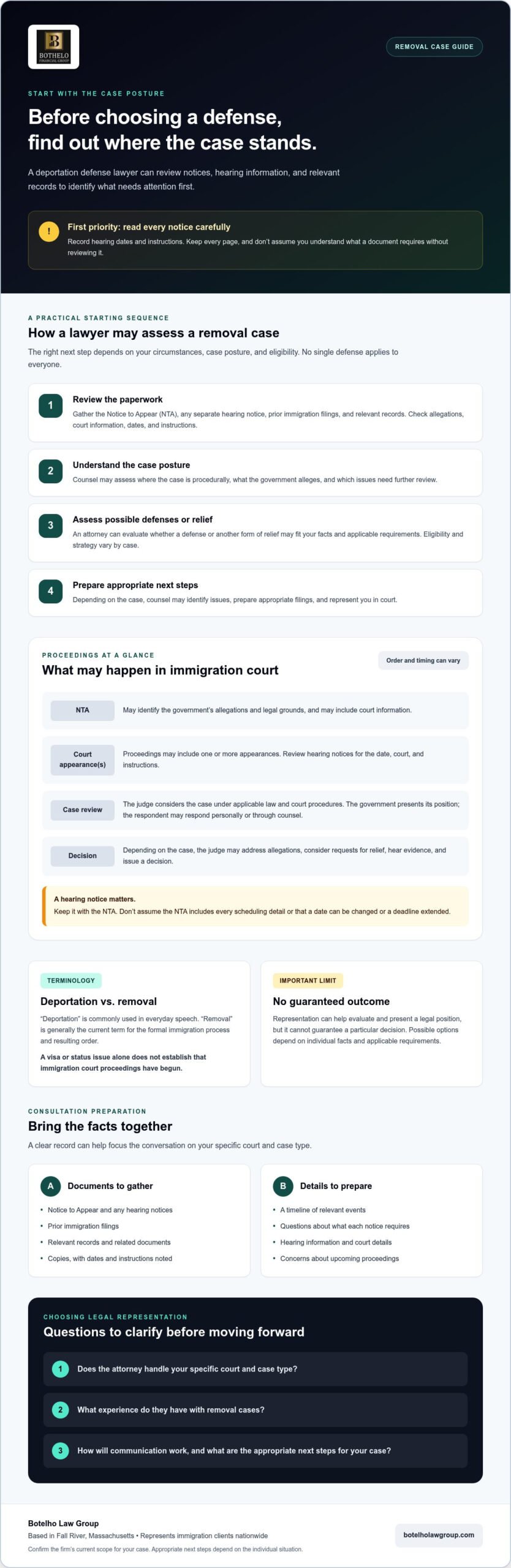
Removal proceedings don’t follow one fixed timeline. The process may begin when a person receives a Notice to Appear (NTA), which identifies the government’s allegations and the legal grounds it is raising. The document may also include information about court proceedings. Check the allegations, court location, and instructions, then have the paperwork reviewed to understand what requires attention. The statutory framework is set out in U.S. law on removal proceedings.
Proceedings may include one or more court appearances. At a hearing, the immigration judge considers the case under applicable law and court procedures. The government’s attorney presents the government’s position; the respondent, the person facing removal, may respond personally or through counsel. Depending on the case, the judge may address the allegations, consider requests for relief, hear evidence, and issue a decision. The order and timing of these steps can vary.
Why hearing notices matter: Reviewing a hearing notice promptly helps you identify the date, court, and instructions that may require timely attention.
What should you do after receiving a Notice to Appear?
Keep the NTA with every related document, including any separate hearing notice. Record dates and instructions, and make copies for your records. Don’t assume the NTA contains every scheduling detail, or that a date can be changed or a deadline extended. Ask an attorney to review the allegations, procedural posture, and paperwork so you can understand which requirements apply to your case.
A deportation defense lawyer can help assess how the documents fit together, identify questions to address, and prepare for upcoming proceedings. Don’t use general information to decide what to file or how to respond. Appropriate steps depend on the case.
What role does the immigration judge play?
The judge decides issues presented in the court case under immigration law and applicable procedures. The judge is distinct from both sides’ representatives: the government’s attorney advances the government’s position, while the respondent’s attorney advises and represents the respondent. If the judge issues a decision, potential review or appeal options and their filing requirements depend on the decision and case posture. Confirm current deadlines promptly with counsel, since missing a deadline can affect available options.
For a focused review of an NTA or hearing notice, you can learn more about Botelho Law Group’s deportation defense. Confirm that the firm handles your specific case type and court.
Is Deportation Inevitable, or Could a Defense or Form of Relief Apply?
Receiving removal paperwork doesn’t, by itself, determine how the case will end. A person may have a legal defense or qualify to request relief, but neither can be assumed from the notice alone. Before identifying options to consider, an attorney must assess the allegations, case posture, evidence, and current eligibility requirements.
What kinds of options might an attorney assess?
Possible categories include asylum, withholding of removal, and cancellation of removal. Each has distinct legal requirements, and facts that matter for one may not establish eligibility for another. Asylum may be relevant when a person’s circumstances and supporting evidence meet the applicable standards, but it is not available in every case. A lawyer may also assess whether the government’s allegations or legal basis for removal can be challenged.
For general orientation, the Department of Justice’s immigration court listing provides court information. It does not determine eligibility for relief. A deportation defense lawyer can review which issues warrant closer analysis, including whether cancellation of removal may be relevant. Confirm current eligibility rules and the firm’s representation scope for your specific court and case type.
| Possible category | Questions counsel may assess | Important caveat |
|---|---|---|
| Asylum or withholding of removal | Do the person’s circumstances, account, and available evidence meet the applicable legal standards? | Requirements and procedures differ; eligibility cannot be assumed. |
| Cancellation of removal | Do the person’s immigration history, family circumstances, and other facts satisfy the requirements that apply? | Specific statutory criteria and evidence must be reviewed for the case. |
| Challenge to the allegations or legal basis | Do the records support the government’s claims, and are there legal or procedural issues to examine? | The analysis depends on the actual paperwork and case posture. |
Why does eligibility depend on the details?
Immigration history, prior applications, family circumstances, and court records can affect which options are legally available and what evidence may be needed. A prior filing or decision may also change how a new issue should be evaluated. The standards vary by form of relief, and rules can change. Counsel should verify current requirements and review the complete record before advising whether an option may fit.
Use the table to prepare questions, not as a checklist that proves eligibility. A case-specific assessment can help distinguish possibilities worth investigating from options that may not apply.
How Can You Prepare for a Deportation Defense Consultation?
A focused consultation starts with an organized account of what has happened. Gather the documents you have, note upcoming dates, and prepare a short timeline of important events. The checklist below is a starting point, not legal advice. Your attorney may need different records depending on your case.
Which documents and details should you gather?
Bring originals if requested, along with copies or clear digital scans. Relevant documents may include:
- Notices from immigration authorities or the immigration court, including hearing notices
- Prior immigration applications, petitions, supporting documents, and filing receipts, if available
- Written decisions, orders, or correspondence related to your immigration history
- Identity and travel documents, such as passports or other identification
- Records that may relate to your circumstances or a potential form of relief, if counsel requests them
Write down every date listed in the paperwork and keep copies of communications you receive or send. Your timeline might include when you entered the United States, submitted an application, received a notice, or attended a hearing. For situations involving custody or detention, search guides such as those published by Optimal Bail Bonds can assist families in tracking down booking and facility records. If you’re unsure of a date, mark it as approximate rather than presenting it as exact. Ask counsel which additional materials are appropriate; this list may not cover everything relevant to your case.
What questions should you ask during the consultation?
Use the consultation to clarify the case posture and what requires attention first. Consider asking:
- What stage is my case at, and are there any upcoming dates or immediate deadlines I should understand?
- What procedural steps may come next, and what information do you need from me?
- Which potential defenses or forms of relief, if any, require further eligibility review?
- What evidence or records could be relevant to that assessment?
- Who will handle my matter, and how will the firm communicate updates and requests for documents?
Immigration proceedings are federal, including for people living in Massachusetts, but the location of the immigration court handling a case still matters. Court assignments, procedures, and case-specific facts can affect what you should clarify with counsel. Botelho Law Group is based in Fall River and represents immigration clients nationwide. If you’re preparing to discuss a removal case, contact Botelho Law Group about deportation defense and confirm that the firm handles your specific case type and court.
Choosing a Deportation Defense Lawyer in Fall River or Beyond
The right representation should fit your case’s facts and procedural posture, not just your preferred location. A deportation defense lawyer should be able to explain what stage your case has reached, what issues need review, and what steps may follow. No attorney can promise a particular decision or immigration benefit.
What should you look for in removal defense representation?
Use an initial discussion to assess whether the attorney’s approach is clear, relevant, and specific to your circumstances. Consider asking:
- What experience do you have with removal proceedings similar to mine?
- Who will handle court appearances, filings, and communications about my case?
- How will you explain deadlines, requests for documents, and changes in the case?
- What work is included in the proposed representation, and what falls outside its scope?
- What next steps can you identify after reviewing my records?
Look for answers grounded in your documents and case history, rather than assumptions based on a brief description. Before retaining counsel, make sure you understand the proposed scope of representation, how updates will be shared, and who your point of contact will be. Confirm that the attorney can handle your specific case type and court. A lawyer’s location alone doesn’t establish whether the representation fits your matter.
How can Botelho Law Group help assess your next steps?
Botelho Law Group provides deportation defense and is headquartered in Fall River, Massachusetts. The firm represents immigration clients nationwide, but its location or nationwide reach does not establish whether it can represent someone in every specific court or case type. Confirm the firm’s current scope for your circumstances.
A focused discussion can help clarify the case posture, identify questions that need further legal review, and outline appropriate next steps. Bring the notices and records you have, along with a timeline and any immediate concerns. An attorney can assess the information available, but eligibility and possible outcomes depend on the individual case.
If you’re facing removal proceedings, contact Botelho Law Group to discuss your immigration case.
Take the Next Step With a Clearer Plan
Facing removal can make every notice and hearing date feel urgent. A focused response starts with understanding your case posture, reviewing paperwork carefully, and confirming which deadlines and procedures apply. A deportation defense lawyer can assess your records and discuss potential options, but eligibility and outcomes depend on the individual case.
Before speaking with counsel, gather notices, prior immigration filings, and relevant records. Prepare a timeline and list your most pressing questions so the consultation can focus on your circumstances and appropriate next steps.
Botelho Law Group is headquartered in Fall River, Massachusetts, and provides immigration representation to clients across all 50 states. The firm can discuss your circumstances and assess whether it can represent you based on your court and case type. Contact Botelho Law Group to discuss your immigration case.
You don’t have to sort through the process alone. Organizing the information you have and seeking case-specific guidance can help you move forward with greater clarity.
Frequently Asked Questions
What does a deportation defense lawyer do?
A deportation defense lawyer reviews your immigration history and court paperwork, explains the current case posture, identifies issues that may need attention, and represents you in proceedings included in the agreed scope of representation. The lawyer may assess whether a defense or form of relief could apply. Eligibility depends on your facts and current law, and legal representation does not guarantee a particular result.
Is deportation inevitable after receiving a Notice to Appear?
No. A Notice to Appear alone doesn’t establish the outcome or mean a final removal order has already been issued. The allegations, your immigration history, available evidence, procedural posture, and potential legal options all matter. Have a qualified immigration attorney review the notice and explain what it means in your case. Don’t ignore hearing information or assume general online guidance identifies the right response.
What should I do first if I receive immigration court papers?
Keep every page, note any hearing information, and arrange prompt review with an immigration attorney. Don’t ignore official paperwork or rely on general online information to decide how to respond. Appropriate steps depend on the documents, the stage of your case, and current procedures. Ask counsel which records to bring and whether any listed hearing dates or other time-sensitive matters need immediate attention.
Can a deportation defense lawyer help if I already have a removal order?
An attorney can review the order, case history, and related notices or decisions to assess whether any procedures or options warrant further review. What may be available depends on how and when the order was issued and the circumstances of the case. Don’t assume an appeal, motion to reopen, or other request is available. Ask counsel to verify applicable requirements and deadlines promptly.
How much does a deportation defense lawyer cost?
Legal fees vary based on case complexity, the work required, and the agreed scope of representation. Ask the firm to explain its fee structure, what services are included, how additional work is handled, and when payments are due. Botelho Law Group describes using flat fees for specific immigration filings and hourly billing for complex matters. Discuss the current arrangement for your case directly with the firm.
Can a Massachusetts lawyer represent me in immigration court outside Massachusetts?
Immigration law is federal, and Botelho Law Group represents immigration clients in all 50 states. Whether the firm can handle a specific matter depends on the case, court location, procedural needs, and scope of representation. Confirm those details directly, including who would handle filings and appearances and how case communications will work. The firm is headquartered in Fall River, Massachusetts.
What documents should I bring to a deportation defense consultation?
Bring available immigration court notices, prior applications or decisions, identity documents, and records related to upcoming hearings. A timeline of important events and a written list of questions can make the discussion more focused. Don’t delay contacting counsel while trying to collect every document. Ask the attorney what additional records may be relevant to your particular case and whether copies or originals are needed.