
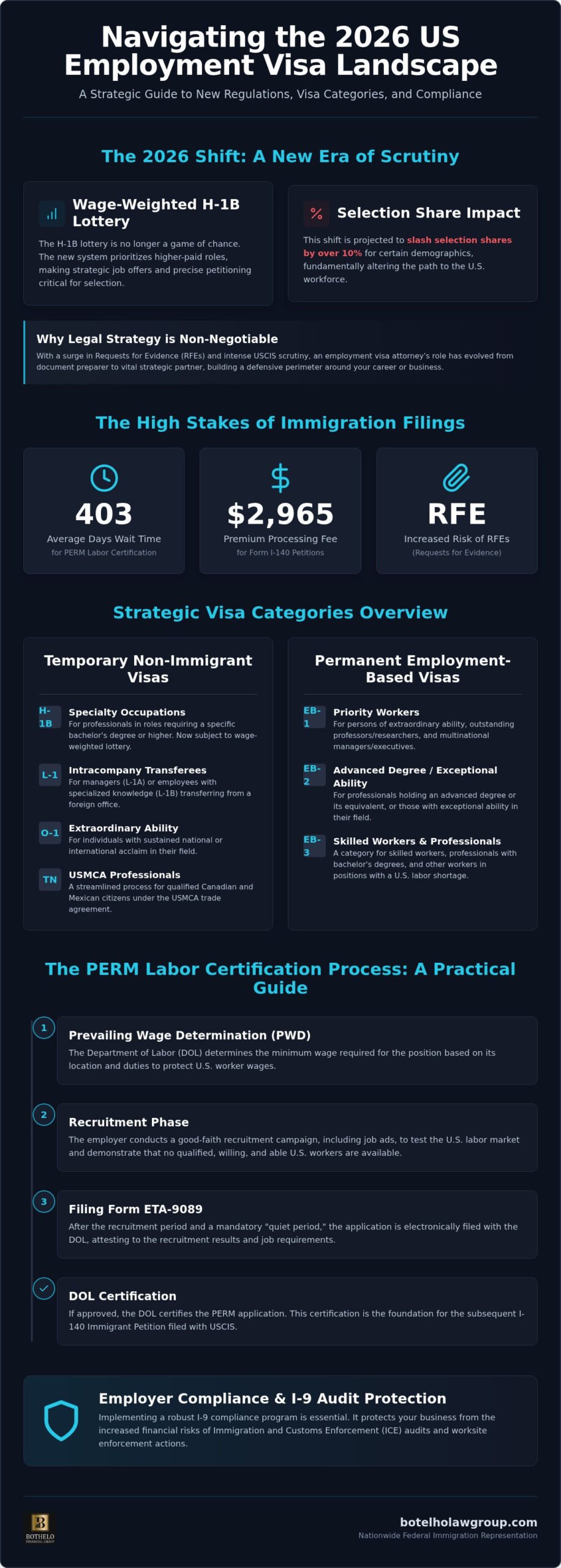
In 2026, the shift to a wage-weighted H-1B lottery is projected to slash the selection share for certain demographics by over 10%, fundamentally changing who secures a future in the U.S. workforce. You likely feel the mounting pressure of these new regulations, which is why engaging an employment based visa attorney has become a critical business necessity. From the $2,965 premium processing fees to the 403-day average wait times for PERM certifications, the margin for error has disappeared. The anxiety of a potential RFE or a failed lottery isn’t just a hurdle; it’s a direct threat to your career or your company’s operational stability.
Securing your professional future requires more than just filing paperwork. It demands high-stakes legal advocacy and a sophisticated strategy to ensure your case survives intense USCIS scrutiny. This article provides a comprehensive roadmap for handling H-1B, L-1, and EB-category visas under the latest federal standards. We will examine the 2026 fee structures, analyze the new weighted selection criteria, and outline a systematic path toward corporate compliance and permanent residency.
Key Takeaways
- Learn why 2026 USCIS policy shifts have transformed the role of an employment based visa attorney from a document preparer into a vital strategic partner for career and corporate security.
- Discover how to navigate the new wage-weighted H-1B lottery system and the specific requirements for L-1 intracompany transfers to ensure a seamless transition for key personnel.
- Gain a clear understanding of the PERM labor certification process, including the current 2026 timelines for prevailing wage determinations and recruitment phases.
- Identify the critical steps for implementing a robust I-9 compliance program to protect your business from the increased financial risks of ICE audits and worksite enforcement.
- Understand the advantage of partnering with a firm that provides nationwide federal immigration representation while offering localized, personalized consultations in Fall River, MA.
The Role of an Employment Based Visa Attorney in 2026
In 2026, securing a work visa requires more than administrative accuracy. An employment based visa attorney acts as a strategic architect for corporate expansion and individual stability. With premium processing fees for Form I-140 reaching $2,965 and the implementation of wage-weighted selection, every petition is a high-stakes investment. We don’t just file forms; we build a defensive perimeter around your professional aspirations. This protective advocacy is essential because the margin for error has narrowed significantly under current USCIS oversight.
The complexity of the modern H-1B visa program and other EB categories necessitates a deep understanding of the friction between the Department of Labor (DOL) and USCIS. While the DOL focuses on protecting U.S. wages through prevailing wage determinations, USCIS scrutinizes the specific eligibility of the foreign national. A specialized attorney bridges this gap. We ensure that the labor certification and the final petition are perfectly synchronized, preventing contradictions that often lead to denials.
Why Professional Representation is Non-Negotiable
The 2026 regulatory environment has seen a marked surge in Requests for Evidence (RFEs). These aren’t mere requests for missing papers; they’re often aggressive challenges to the legitimacy of the role or the candidate’s qualifications. We mitigate these risks through several key actions:
- Precision in Specialty Occupations: We draft job descriptions that satisfy the rigorous criteria, proving that the role requires a specific degree and complex skill set.
- RFE Prevention: By anticipating USCIS objections, we include comprehensive evidence in the initial filing to preempt common challenges before they arise.
- Fraud Mitigation: Meticulous documentation ensures all representations are accurate, protecting both the employer and employee from unintended allegations of visa fraud.
The Botelho Approach: Focused Advocacy for Global Talent
At Botelho Law Group, we view every visa as a step toward a larger objective. Our methodology aligns immediate work authorization with your long-term residency goals, ensuring that an L-1 or H-1B today doesn’t create a hurdle for a Green Card tomorrow. While we operate as a dedicated Immigration Lawyer Fall River MA, our reach is nationwide. We represent clients in all 50 states, providing the sophisticated legal strategy of a large-scale firm with the personalized attention of a local partner. This dual identity allows us to handle complex federal litigation while remaining accessible to the businesses driving the SouthCoast economy.
Strategic Categories: From H-1B to Permanent Residency
Selecting the correct visa category is not merely a box-checking exercise; it’s a tactical maneuver that dictates your future in the United States. An employment based visa attorney analyzes your professional background against current federal priorities to build a multi-layered strategy. This approach ensures you don’t just secure temporary entry but establish a viable foundation for permanent residency. In the 2026 landscape, where selection criteria have become increasingly rigid, matching your qualifications to the correct legal framework is the difference between approval and a life-altering denial.
Temporary Non-Immigrant Visas (H, L, O, TN)
In 2026, the H-1B lottery is no longer a game of chance but a competition of economic value. The new wage-weighted selection system favors higher-paid roles, making it vital for employers to structure job offers with extreme precision. For Massachusetts organizations, cap-exempt filings for universities and non-profit research entities remain a powerful tool to bypass the annual lottery altogether. L-1 visas provide a stable route for multinational companies to transfer managers (L-1A) or specialized knowledge staff (L-1B) without the lottery’s uncertainty; working with a dedicated L-1 visa lawyer ensures your intracompany transfer petition is architected to withstand the heightened USCIS scrutiny of 2026. Additionally, O-1 visas serve those with extraordinary ability, while TN visas offer streamlined entry for Canadian and Mexican professionals under the USMCA framework.
Permanent Employment-Based Green Cards (EB-1, EB-2, EB-3)
Transitioning from a temporary work permit to permanent residency involves navigating the complex preference system. USCIS defines several Employment-Based Immigrant Visas, ranging from EB-1 priority workers to EB-3 skilled workers. EB-1 applicants must meet the high ‘Extraordinary Ability’ standard, while many EB-2 candidates utilize National Interest Waivers (NIW) to bypass the lengthy labor certification process. EB-3 remains the primary path for professionals and skilled workers, though it requires meticulous attention to the PERM process to avoid multi-year delays. An employment based visa attorney can help you determine the most efficient preference category based on your specific credentials and current processing times. For those who have already secured permanent residency and are pursuing the final step of naturalization, it’s equally important to understand that a denial is not the end — working with an experienced N-400 denial appeal lawyer can help you challenge USCIS errors and fight your citizenship rejection effectively.
Investment and Treaty Visas
Entrepreneurs from treaty countries often find the E-2 visa to be the most efficient entry point for their U.S. ventures. This category allows individuals to direct and develop a business in which they’ve invested substantial capital. Working with an E-2 investor visa lawyer ensures that your investment structure meets federal requirements while protecting your personal assets. These treaty-based options offer significant flexibility for those who don’t fit traditional corporate employment models. If you’re unsure which category fits your professional profile, consulting with a legal advocate is the first step toward establishing a secure presence in the U.S. market.
The PERM Labor Certification Process: A Practical Guide
The PERM Labor Certification process is the most scrutinized phase of the employment-based Green Card journey. The Department of Labor (DOL) acts as a rigorous gatekeeper; its primary mission is to ensure that hiring a foreign national doesn’t adversely affect the wages or working conditions of U.S. workers. In 2026, precision is paramount, as standard non-audited applications now take approximately 403 days to process. If your case is selected for an audit, you can expect an additional 290 days of delay. An employment based visa attorney provides the meticulous oversight needed to survive this 22-month potential marathon without triggering a fatal rejection.
Step 1: Prevailing Wage and Job Description
The Prevailing Wage Determination (PWD) serves as the legal foundation for every PERM case by establishing the minimum salary an employer must pay to avoid displacing local labor. Currently, obtaining a PWD takes between 2.5 and 3 months. Success at this stage requires aligning job requirements with O*NET occupational standards with absolute accuracy. We negotiate with the DOL on wage level classifications to ensure the salary reflects the actual duties and requirements of the role. If the job description is too broad or the wage level is miscalculated, the entire process can collapse before it truly begins.
Step 2: The Recruitment Phase and Form 9089
Once the wage is set, the employer must test the local labor market through a strictly regulated recruitment phase. This includes placing advertisements in Sunday newspapers of general circulation, posting job orders with the State Workforce Agency, and maintaining internal notice of filing. Every applicant must be evaluated against the stated job requirements. We assist employers in documenting lawful, job-related reasons for every rejection to ensure the audit file is bulletproof. With audit rates holding at 18.7% as of late 2025, your documentation must be beyond reproach.
The final electronic filing of ETA Form 9089 is a high-stakes declaration of compliance. An employment based visa attorney ensures that every record, from the initial PWD to the final resume review, meets federal standards. This disciplined approach minimizes the risk of a DOL audit and secures the priority date necessary for the subsequent I-140 filing. We manage these complex timelines so that your business can focus on growth rather than bureaucratic delays. For a comprehensive breakdown of each phase and the documentation required at every stage, our detailed guide on navigating the PERM labor certification process in 2026 provides the step-by-step framework employers and foreign professionals need to protect their investment of time and resources.
Employer Compliance and I-9 Audit Protection
In 2026, the risk of hiring foreign talent extends far beyond the initial visa approval. Federal enforcement has shifted toward aggressive worksite inspections, making the guidance of an employment based visa attorney indispensable for corporate risk management. As of March 2026, Immigration and Customs Enforcement (ICE) has expanded the definition of “substantive violations,” meaning administrative errors that were once correctable now trigger immediate financial penalties. For a first offense, fines for these substantive errors range from $288 to $2,861 per form. For a mid-sized Massachusetts business with minor oversights across dozens of files, these costs escalate into a significant liability.
Proactive Auditing and Training
The most effective defense against federal scrutiny is a rigorous internal compliance program. We work with HR departments to conduct internal audits that mirror the intensity of an actual ICE inspection. This process identifies missing forms, improper dating, and incomplete verification documents before they become actionable offenses. Beyond the I-9, employers sponsoring H-1B workers must maintain a Public Access File (PAF) for every beneficiary. These files must contain specific data, including:
- Evidence of the prevailing wage and the actual wage paid to the employee.
- A copy of the certified Labor Condition Application (LCA).
- A summary of the employer’s benefit offerings.
Failure to produce a complete PAF during a Department of Labor audit can result in heavy fines or debarment from the visa program entirely. We provide the structured oversight necessary to keep these records bulletproof and ensure your staff is trained on anti-discrimination rules during the hiring process.
Defense During Federal Inspections
When USCIS or ICE arrives for a site visit, the immediate response of your staff determines the legal outcome. Fraud Detection and National Security (FDNS) officers often conduct unannounced visits to verify that H-1B or L-1 employees are performing the duties described in their petitions. Having a dedicated employment based visa attorney on call ensures that your rights are protected during these inquiries. We guide you through the process of responding to FDNS inquiries and represent your interests if an inspection escalates into a formal audit. Demonstrating a history of good-faith compliance through documented training and internal audits is the most powerful tool for mitigating potential penalties. If you need to shore up your records against federal scrutiny, contact our compliance team to secure your business operations.
Why Choose Botelho Law Group in Fall River, MA?
Choosing an employment based visa attorney is a decision that impacts your company’s operational continuity and your family’s long-term security. At Botelho Law Group, we provide a sophisticated legal strategy that combines nationwide federal reach with the personalized attention of a local partner. While we represent clients in all 50 states, our roots in Bristol County allow us to act as a dedicated guide for the businesses and professionals driving the SouthCoast economy. We don’t just process applications; we provide a defensive shield against the complexities of federal oversight.
A Full-Service Safety Net for Foreign Professionals
High-earning professionals on H-1B or L-1 visas face unique challenges that extend beyond their work authorization. Most firms focus solely on the visa, ignoring the intersection of immigration status and personal wealth. We bridge this gap by integrating your immigration strategy with comprehensive asset protection. For those building a life in Massachusetts, it’s vital to secure the assets you’ve worked hard to acquire. Our team includes a specialized power of attorney lawyer Fall River to ensure your autonomy and holdings are protected regardless of future policy shifts. In the event of a tragedy, families of foreign nationals working in the U.S. should also be aware that a wrongful death lawyer Fall River families trust can help navigate the complex intersection of probate administration and Bristol County litigation. This full-service approach provides a level of security that standard immigration firms simply cannot match.
Serving the Massachusetts Business Community
Our firm serves as a vital resource for the tech and healthcare hubs throughout Bristol County. We understand the high stakes involved when a local hospital or a software firm in New Bedford needs to secure specialized talent. Our Fall River headquarters offers convenient access for employers in Providence, Fall River, and the surrounding areas. You won’t be passed off to a junior paralegal; you’ll have direct access to lead attorneys who prioritize your corporate deadlines and understand the urgency of your hiring needs. We’ve built our reputation on protective advocacy, ensuring that your business remains compliant while you focus on growth.
The 2026 regulatory environment demands a legal partner who operates with professional confidence and a results-oriented mindset. We invite you to experience the Botelho advantage, where sophisticated legal strategy meets relentless dedication to your interests. Whether you’re a multinational corporation or an individual professional with extraordinary ability, your path to U.S. work authorization starts here. Contact Botelho Law Group today to initiate your employment visa consultation and secure your professional future with a focused advocate.
Secure Your Professional Legacy in the United States
The 2026 immigration landscape is defined by its lack of leniency. Whether you’re navigating the new wage-weighted H-1B lottery or managing the extensive PERM certification timeline, the success of your petition depends on absolute legal precision. An employment based visa attorney from Botelho Law Group provides the sophisticated advocacy required to overcome these hurdles while protecting your corporate interests. Our firm bridges the gap between federal immigration goals and personal financial security, offering comprehensive asset protection alongside our nationwide representation. We maintain a local Fall River office to ensure the Massachusetts business community has direct, personalized access to high-stakes legal strategy.
Don’t leave your career or your workforce to chance in an era of heightened enforcement. We’re ready to act as your dedicated representative and strategic partner. Schedule a Consultation with an Employment Based Visa Attorney today to fortify your future in the American market. We look forward to helping you achieve your professional goals with confidence and security.
Frequently Asked Questions
How long does it take to get an employment-based visa in 2026?
Timelines vary by category, but a standard PERM-based Green Card application currently takes over 13 months for the labor certification phase alone. When you include the 2.5 to 3 months for a prevailing wage determination and subsequent USCIS processing, the entire journey often exceeds 18 months. Non-immigrant visas like the H-1B or L-1 move faster, especially with premium processing, but they remain subject to strict annual caps and specific filing windows.
Can I change employers while my H-1B visa is pending?
You can generally change employers under H-1B portability rules if you already hold valid H-1B status and the new employer files a non-frivolous petition. However, if your initial petition is still pending under the annual cap, moving before approval is extremely risky. Consulting an employment based visa attorney is vital to ensure your status remains continuous and you don’t inadvertently trigger an unauthorized employment violation during the transition.
What is the difference between an EB-2 and an EB-3 Green Card?
The primary distinction lies in the job requirements and the candidate’s professional background. EB-2 is reserved for positions requiring an advanced degree or for individuals with exceptional ability, while EB-3 covers professionals with baccalaureate degrees and skilled workers with at least two years of experience. Because EB-2 often has shorter priority date wait times for certain countries, qualifying for this higher preference category can significantly accelerate your path to permanent residency.
Does my employer have to pay for my employment visa attorney fees?
Federal law mandates that the employer must pay all costs associated with the PERM labor certification and the H-1B petition, including legal fees and the ACWIA fee. These costs cannot be passed on to the employee through wage deductions or reimbursement schemes. For other categories like the EB-1 or O-1, the payment structure is more flexible, but the Department of Labor remains strict about employer-funded recruitment to protect U.S. labor market integrity.
What happens if my employment-based visa application is denied?
A denial requires immediate strategic intervention but isn’t always the end of your case. You may have the option to file a Motion to Reopen or Reconsider, or you might appeal the decision to the Administrative Appeals Office. In many instances, the most efficient path is to address the specific grounds for denial and re-file a corrected petition. We analyze the denial notice to determine if USCIS made a legal error that can be challenged. For those who have progressed further along the immigration journey and face a naturalization denial, consulting an N-400 denial appeal lawyer can open the door to a fresh, comprehensive review of your citizenship case before critical deadlines pass.
Can my spouse and children work in the U.S. on my employment visa?
Work authorization for dependents depends entirely on your specific visa classification. Spouses of L-1 and E-2 holders are granted “employment authorized” status automatically upon entry. However, H-4 spouses can only apply for an Employment Authorization Document once the principal H-1B holder has an approved I-140 or has reached specific milestones in the Green Card process. Children on dependent visas are generally permitted to attend school but are prohibited from accepting employment.
Is premium processing available for all employment-based petitions?
Premium processing is available for most Form I-129 and I-140 filings, though the fees and timelines vary by classification. As of March 1, 2026, the fee for premium processing of an I-140 petition is $2,965. While this service guarantees a response within 15 to 45 days, it doesn’t guarantee an approval. It simply accelerates the timeline for a decision or a Request for Evidence, which is a critical advantage for time-sensitive corporate hiring.
How does the 2026 H-1B lottery system work?
As of February 27, 2026, the H-1B lottery has transitioned to a wage-weighted selection process that prioritizes higher-paid positions. This system replaces the previous random selection, effectively favoring candidates in the highest prevailing wage levels for their specific occupation. Engaging an employment based visa attorney helps employers strategically evaluate salary offers during the March registration period to maximize the probability of selection in this increasingly competitive and expensive federal system.