
Does every asset a loved one leaves behind have to pass through probate? Not necessarily. How property is titled, whether it has a beneficiary designation, and what estate planning documents are in place can all affect what happens next. If you’re sorting through those questions, a Massachusetts probate lawyer can help explain what to review before you make decisions about the estate.
Court filings, deadlines, estate responsibilities, and disagreements among beneficiaries can feel like a lot to manage at once. The personal representative must follow a defined process, and missed steps or unclear records can create complications. Start by identifying the assets, the person authorized to act, and any immediate concerns. That gives you a clearer picture of what needs attention.
This article explains when Massachusetts probate may apply, what the personal representative generally must do, and how to prepare for estate-related questions. You’ll find practical guidance on records to gather and issues that may warrant legal review. Botelho Law Group focuses on estate planning and asset protection in Massachusetts, helping put questions about estate administration in the context of the documents and plans that shape an estate.
Key Takeaways
- Whether assets require probate depends on how they’re owned and whether they pass through another arrangement, not simply on whether a will exists.
- The personal representative is responsible for administering the estate and keeping clear records of its assets, payments, and distributions.
- Informal and formal probate follow different procedures. The appropriate path depends on the estate’s circumstances and current Massachusetts rules.
- Gather available records about assets, ownership, court notices, and family contacts to make estate questions easier to assess.
- A Massachusetts probate lawyer can review estate questions in context. Botelho Law Group’s estate-planning and asset-protection work can help you understand how planning documents and ownership arrangements fit together.
When Does an Estate Need Probate in Massachusetts?
Probate is the court-supervised process for identifying, administering, and distributing a deceased person’s assets that require estate administration. It can establish who has authority to act for the estate and provide a legal process for handling property and claims. The Massachusetts Probate and Family Court oversees probate matters, but not every asset a person owned necessarily passes through probate.
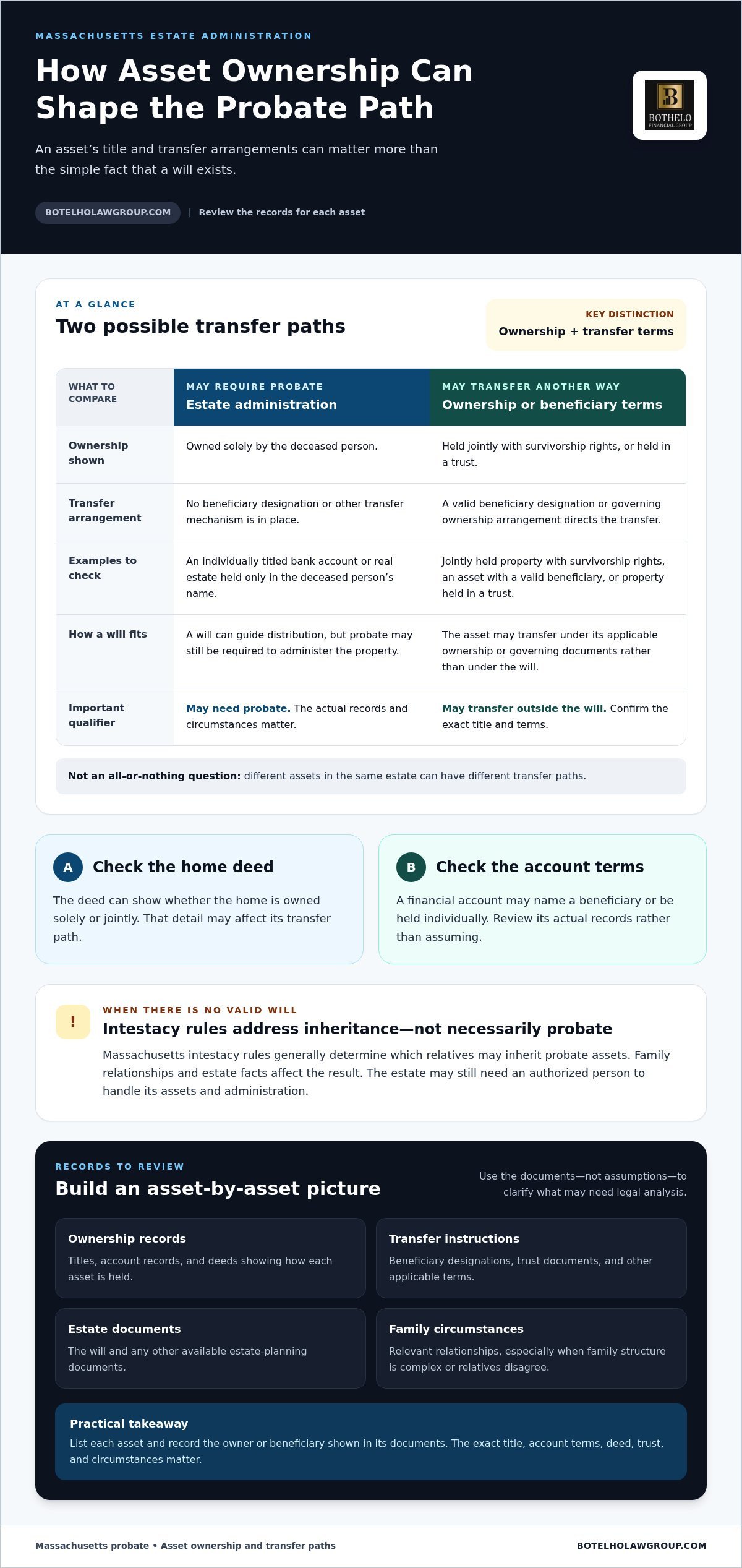
A will can name beneficiaries and explain how property should be distributed, but having a will doesn’t automatically keep assets out of probate. The key questions are often how each asset is titled and whether an ownership or beneficiary arrangement directs its transfer. Reviewing the actual records, rather than relying on assumptions about the estate plan, can help identify which property may need administration.
Which Massachusetts estate assets may pass through probate?
Assets owned solely in the deceased person’s name, with no beneficiary designation or other transfer mechanism, may need probate administration. An individually titled bank account or real estate held only in the deceased person’s name, for example, may raise probate questions. A will can guide the distribution of probate property, but the court process may still be required to administer it.
By contrast, property held jointly with survivorship rights, assets with a valid beneficiary designation, or property held in a trust may transfer under the applicable ownership or governing documents rather than under the will. The exact title, account terms, deed, trust, and circumstances matter. Review the actual records instead of relying only on an asset list or a general understanding of how the property was supposed to pass.
Consider a home and a financial account. The home’s deed may show sole or joint ownership, while the account may name a beneficiary or be held individually. Those details can result in different transfer paths within the same estate. Make a list of each asset and record the owner or beneficiary shown in its documents. This can help clarify which questions need legal analysis.
What if someone dies without a will in Massachusetts?
When no valid will controls the distribution of property, Massachusetts intestacy rules generally determine which relatives may inherit probate assets. The result depends on the family relationships involved and the estate’s facts. A surviving spouse, children, parents, or other relatives may affect the analysis. Blended-family circumstances can make the outcome more complex than an assumption that everything goes to the closest relative.
Intestacy rules address distribution, but they don’t necessarily eliminate the need for probate. The estate may still need an authorized person to handle its assets and administration. Review family relationships, ownership records, and available estate documents, especially when the family structure is complex, a will’s validity is questioned, or relatives disagree. This helps separate assumptions from facts that may matter to the legal analysis.
How Massachusetts Probate Works: The Personal Representative’s Role
Probate administration gives an authorized person responsibility for handling the estate under Massachusetts law and applicable court procedures. That person is called the personal representative. The role is practical and fiduciary: organize information, safeguard estate property, follow required procedures, and account for decisions and transactions. A will may nominate someone, but the court appointment and the estate’s circumstances determine who has authority to act.
The sequence varies by estate, but administration generally follows these stages:
- Identify the process and prepare the filing. Review the will, family circumstances, assets, and other relevant records to determine the appropriate probate route and prepare the required petition and supporting documents.
- Seek appointment. File with the Probate and Family Court and address any required notices, consents, or court questions. The representative’s authority depends on the appointment and applicable procedure.
- Inventory and protect estate property. Locate assets, confirm ownership, maintain records, and take reasonable steps to preserve property while administration proceeds.
- Address obligations and distribute assets. Follow applicable notice and claim procedures, resolve estate obligations, and distribute remaining property according to the will or Massachusetts law.
- Complete administration. Keep a clear record of receipts, payments, and distributions, then take the steps required to conclude the estate under the applicable process.
What does a Massachusetts personal representative do?
A personal representative is the court-authorized fiduciary responsible for administering the estate, protecting its property, and carrying out required steps toward distribution and closure. In practice, that means gathering financial and ownership records, communicating as required, documenting estate transactions, and avoiding informal transfers that could cause confusion or disputes. A will in the representative’s possession generally must be filed with the court within 30 days of learning of the death. Specific duties and deadlines depend on current rules and the case.
Estate obligations are generally handled through estate assets, not by treating the deceased person’s accounts as the representative’s own funds. Keep estate property and personal finances separate, and document every payment. A representative’s personal exposure can depend on the facts and conduct, so questions about debts, distributions, or use of funds call for legal review before action.
What can affect the probate timeline?
There is no single completion date that fits every estate. Court processing, missing or unclear asset information, property that takes time to value or transfer, creditor matters, and beneficiary disagreements can all affect progress. Massachusetts probate generally must be initiated within three years of death, though a late and limited formal proceeding may be available in certain circumstances. That is not a universal deadline for completing administration. Confirm current court timing and the deadlines that apply to the specific estate.
Missed filings or poorly documented transactions can complicate administration. A Massachusetts probate lawyer can help assess the representative’s responsibilities alongside the estate’s records and circumstances. Botelho Law Group’s estate-planning and asset-protection work provides a Massachusetts perspective on how ownership arrangements and planning documents relate to estate matters. Learn more about Massachusetts estate planning and asset protection.
Informal, Formal, or Disputed Probate: Understanding the Differences
Massachusetts probate can follow different procedural paths. Informal and formal probate are distinct administration processes, while a will contest or disagreement about an estate can raise separate issues that may require court attention. The appropriate route depends on the estate’s facts, the documents filed, and current Massachusetts rules. A dispute doesn’t automatically mean every issue will go to trial, but it should be addressed rather than ignored.
How do informal and formal probate differ?
At a high level, informal probate is generally intended for matters that can proceed with less court involvement, while formal probate involves greater court oversight. These are broad distinctions, not a test for deciding which process applies. The court’s role, notice requirements, and procedural steps depend on the circumstances and applicable rules.
| Process | General distinction | What may affect the route |
|---|---|---|
| Informal probate | A less court-intensive process may be available when the matter can proceed without the additional oversight required in a formal case. | Eligibility, required filings, notice, and whether objections or other complications arise. |
| Formal probate | A more court-supervised process may be appropriate when the circumstances call for judicial involvement or a formal determination. | Contested facts, objections, questions about a will, or other case-specific issues. |
The table is a starting point, not an eligibility checklist. Massachusetts terminology and requirements can be technical, and the filing route may depend on details that aren’t apparent from a summary of the family’s situation. Before a filing, review the available will and estate records, identify known objections, and use the current court forms and procedures. Assuming the estate qualifies for one process without checking can complicate administration.
When can an estate dispute require legal attention?
Concerns worth assessing include doubts about whether a will is valid, questions about a personal representative’s actions, disagreements over what a beneficiary is entitled to receive, or concerns about how estate property is being handled. A family disagreement may be resolved without a trial, but the options and risks depend on the issue, the evidence, and any applicable deadlines.
Preserve documents connected to the concern, such as relevant versions of a will, court notices, account records, and communications. Write down specific events, dates, and questions while details are clear. Avoid altering records or making disputed transfers based on assumptions. A Massachusetts probate lawyer can help distinguish a procedural concern from a legal objection and assess what steps may be appropriate.
General information can explain the difference between administration paths, but it can’t determine an heir’s rights or whether a specific will is valid. Focused legal review is especially important when a filing has been made, an objection is pending, or a representative’s conduct is in question. Individualized analysis can clarify the issue without assuming litigation is inevitable or predicting how a court will resolve it.
What to Gather Before Addressing a Massachusetts Probate Matter
An organized set of records can help clarify what the estate includes, who may have authority to act, and which questions need attention first. You don’t need every document in hand before seeking legal guidance. Start with what’s available, note what appears to be missing, and keep sensitive information private rather than posting it publicly or sending it through unsecured channels.
Which records can help clarify the estate?
Gather copies where possible and preserve originals securely. Records may be incomplete or stored in different places, so note where each item came from and whether it needs follow-up.
- The will, any trust documents, and related amendments or written instructions.
- Recent statements for bank, investment, retirement, and other financial accounts, along with available beneficiary information.
- Deeds, mortgage information, vehicle records, and documents showing how property is titled.
- Insurance or other records that identify potential beneficiaries or payments connected to the estate.
- Probate court notices, filed documents, and correspondence with financial institutions, creditors, beneficiaries, or other relevant parties.
Keep a separate list of assets and record the owner shown on each document. This can help identify which property may require administration and which may transfer under a separate arrangement. If you can’t locate a will, account statement, or deed, note what is missing and what you’ve already searched. A Massachusetts probate lawyer can help assess the records you have and identify what information may be needed next.
What questions should a personal representative organize?
Before discussing next steps, write down whether a personal representative has been nominated or appointed, what court papers have arrived, and whether an immediate issue needs attention. Include known estate obligations, upcoming payments, property that requires care, and any disagreements or questions raised by beneficiaries. Avoid making distributions or relying on informal promises until the representative’s authority and applicable requirements are understood.
- Who are the known family members, beneficiaries, and other key contacts?
- What has happened so far, and on what dates?
- Which court filings, notices, or requests remain unanswered?
- What records or assets are missing, disputed, or difficult to access?
A concise timeline can make a first conversation more productive. Note dates of important calls, letters, filings, and decisions, and preserve related messages without editing them. Pay prompt attention to official court communications and keep envelopes or delivery details when relevant. If you’re planning ahead for incapacity, Massachusetts power of attorney guidance can help explain how planning for financial decision-making during life relates to broader estate planning.
Bring the records and questions you have to a legal discussion. You don’t need a perfect file to start. Discuss your Massachusetts estate-planning questions with Botelho Law Group.
How Botelho Law Group Can Guide Massachusetts Estate Matters
Probate questions can involve the will, ownership records, beneficiary designations, family relationships, and the person’s broader estate plan. Botelho Law Group is based in Fall River and focuses on estate planning and asset protection in Massachusetts. That work can help put estate questions in context by considering how planning documents and ownership arrangements relate to the property and people involved.
What can legal guidance clarify in an estate matter?
A careful review can bring key records and concerns together. For example, a will may name a representative, while an account statement or deed raises separate questions about ownership or transfer. Reviewing the documents as a whole can help identify what is clear, what needs further investigation, and which responsibilities or potential disagreements may call for attention.
Guidance can also help a personal representative or family member frame the next questions: What authority has been established? Which documents govern a particular asset? Are there communications or concerns that should be preserved? The analysis depends on the estate. It doesn’t guarantee a particular result or mean that one court procedure will fit every situation.
For someone searching for a Massachusetts probate lawyer, an important first step is to understand the estate’s facts rather than assume a process based on a single document or family account. Estate-planning and asset-protection knowledge can help clarify how ownership arrangements and planning documents fit together. Any conclusions about rights, duties, or court steps require consideration of the actual records and current Massachusetts rules.
How to take the next step with Botelho Law Group
Make an initial discussion more focused by gathering available estate documents and briefly identifying the immediate concern. Note whether a personal representative has been appointed, what court or financial institution communications have arrived, and whether there are time-sensitive questions or disagreements. Keep sensitive financial and personal information secure. Missing records need not prevent you from seeking guidance.
A focused discussion can help organize the estate’s circumstances, documents, and concerns, and identify questions that may need further attention. You don’t need to resolve every uncertainty in advance. A clear summary gives counsel a useful starting point for understanding the matter.
For individualized guidance grounded in Massachusetts estate planning and asset protection, Contact Botelho Law Group about your Massachusetts estate matter.
Take a Clear, Informed Next Step
Estate matters can carry legal and personal consequences, but uncertainty doesn’t have to dictate your next move. A focused review can help you understand which questions need attention and what information may help address them. If you’re considering a Massachusetts probate lawyer, look for guidance that takes the estate’s documents, relationships, and circumstances into account rather than relying on assumptions.
Botelho Law Group brings a Massachusetts perspective grounded in estate planning and asset protection. Before a discussion, note your most pressing concern and gather the records you have. You don’t need every answer in advance. A careful conversation can help organize the issues and identify appropriate next steps.
Discuss your Massachusetts estate matter with Botelho Law Group to take the next step toward understanding your estate-planning questions.
Frequently Asked Questions
How long does probate take in Massachusetts?
There’s no fixed timeline for every Massachusetts estate. Court processing, asset transfers, missing records, creditor issues, and disputes can all affect how long administration takes. A creditor generally has one year from the date of death to file a claim, which may influence when final distributions are appropriate. That period isn’t a guaranteed probate completion date. A Massachusetts probate lawyer can assess which deadlines and procedural steps apply to the specific estate.
Is a personal representative required to hire a probate lawyer in Massachusetts?
A personal representative isn’t automatically required to hire a lawyer for every Massachusetts probate matter. However, the representative remains responsible for understanding and carrying out applicable duties, and mistakes involving filings, estate property, or distributions can have consequences. Legal guidance may be especially useful if the will is contested, beneficiaries disagree, assets are difficult to identify, or the representative is uncertain about a court requirement. The need for counsel depends on the estate’s circumstances.
What happens if a Massachusetts estate owns property in another state?
Property located outside Massachusetts can raise a separate administration issue, particularly if real estate is titled solely in the deceased person’s name. The state where the property is located may require its own court proceeding or other process before title can be transferred. The result can depend on how the property is owned and whether a trust or other transfer arrangement applies. Review the out-of-state deed and governing records in light of the estate’s circumstances.
Can someone who lives outside Massachusetts serve as a personal representative?
Living outside Massachusetts doesn’t by itself settle whether someone can serve. Appointment eligibility and any conditions can depend on Massachusetts law, the person’s circumstances, the will, and the court’s requirements. A nominee who lives elsewhere should review the relevant rules before assuming they can act or submitting filings. The court appointment establishes authority, so practical questions about serving, notices, or any required arrangements should be addressed before the person takes action for the estate.
Do estate taxes and probate serve the same purpose?
No. Probate is a court-supervised process for administering eligible estate assets; estate tax is a tax obligation assessed under applicable tax law. One doesn’t automatically mean the other applies. For people who died on or after January 1, 2023, Massachusetts estate tax applies to estates valued over $2 million, with tax levied on the value exceeding that threshold. Tax exposure depends on the estate’s facts, so obtain tax and legal analysis before making decisions.
What happens if a personal representative cannot locate an estate document?
A missing document doesn’t automatically end the administration, but it can affect what the representative can establish or do. Record which document is missing, when it was last known to exist, and what steps have been taken to locate it. Check relevant files and contact institutions that may hold copies. Don’t recreate, alter, or sign a substitute as though it were an original. Tell counsel about the gap promptly, especially if a filing or decision depends on the document.