
Could an extended trip abroad, a past legal issue, or an inconsistency in your immigration records raise questions about your citizenship application? An N-400 citizenship application lawyer can review those details before you file, rather than simply help complete the form. It is reasonable to want clarity about how your personal history may affect your application and whether your answers are complete and consistent. A careful review can identify questions that may need attention, though no attorney can guarantee a USCIS outcome.
This article explains what an N-400 lawyer may review, which issues involving continuous residence, physical presence, and good moral character deserve careful consideration, and what legal representation can involve. You will also learn how to prepare for a focused discussion of your circumstances before filing. Botelho Law Group represents naturalization and citizenship applicants nationwide from its headquarters in Fall River, Massachusetts. The firm provides individualized legal guidance to help applicants understand case-specific questions and make an informed decision about next steps.
Key Takeaways
- An N-400 citizenship application lawyer can assess case-specific concerns before you file, rather than simply review form entries.
- Travel, residence, and personal history may raise questions that deserve careful legal assessment.
- You can file independently, but legal counsel may offer case-specific analysis when your circumstances are complex.
- Organize immigration records, travel history, and prior applications to support a focused legal review.
- Botelho Law Group represents naturalization applicants nationwide from its headquarters in Fall River, Massachusetts.
When an N-400 Citizenship Application Lawyer Can Help Before You File
An N-400 citizenship application lawyer provides legal guidance tailored to your naturalization case. The role is not simply to fill in boxes. An attorney can review your history, identify unanswered questions, and help you understand what may need further analysis before you submit the application.
Applicants may seek counsel to assess uncertainty about eligibility, organize supporting records, or consider how earlier immigration or legal matters relate to the information requested. The Form N-400, Application for Naturalization is used to apply for naturalization, but a general overview cannot determine how an individual’s facts should be presented or evaluated.
What an N-400 attorney may review
A review may include your immigration background, draft form responses, and available supporting documents. An attorney can compare details across records, flag gaps or apparent inconsistencies, and identify questions that may call for additional legal analysis. For example, different dates or names across documents may need to be understood before you provide information on the application. The scope of representation depends on your circumstances and the services covered by the agreed engagement.
This process can help you approach filing with a clearer understanding of relevant issues. It does not remove your responsibility to provide truthful, complete answers, and it does not give the attorney authority to decide your case. USCIS reviews the application and makes the decision. Legal representation can support preparation and advocacy, but it cannot guarantee approval, a particular timeline, or another specific result.
When legal guidance may be especially useful
Consider seeking case-specific advice before filing if your immigration history is complicated, you have prior legal issues, or you are unsure whether you meet an eligibility requirement. A past event does not automatically determine the outcome of a naturalization case, but its circumstances and related records may matter. A legal review can help clarify what information is relevant and what questions remain unresolved.
Inconsistencies also deserve attention. If dates, addresses, travel details, or earlier filings do not appear to align, pause to understand the discrepancy rather than guessing or leaving a material question unanswered. Gather records that may explain it and discuss the issue before submitting your application. Addressing uncertainty in advance may help prevent avoidable confusion during review, though it cannot eliminate all risk.
Not every applicant needs individualized legal advice. If your circumstances are straightforward and you understand the questions, consult current USCIS instructions and use the latest official guidance for the form and filing process. Instructions explain how to apply, but they cannot provide a legal conclusion for every personal history. The right next step depends on your facts. If an answer may have legal consequences or you cannot confidently reconcile your records, an N-400 citizenship application lawyer can help you assess the issue before you file.
How an Attorney Evaluates N-400 Eligibility and Potential Risks
Eligibility review involves more than checking whether you appear to meet a general rule. An attorney assesses how the applicable requirements relate to your full history and available records. The official USCIS N-400 application page provides current form, eligibility, and filing information. Individual legal questions may still require a closer look at your circumstances.
Residence, physical presence, and good moral character are important areas for review. An attorney may examine travel dates, time spent outside the United States, address history, and other details relevant to your case. A timeline that seems simple at first may need careful reconstruction if travel records or earlier statements contain gaps. The legal analysis can also depend on current law and agency guidance, so another person’s experience may not apply to your circumstances.
Personal history that can raise questions
Prior arrests, charges, or convictions call for individualized review, including attention to the outcome and relevant records. Tax matters, support obligations, or voting history may also raise legal questions depending on what occurred and the surrounding facts. None of these circumstances should be treated in isolation as an automatic approval or denial. An N-400 citizenship application lawyer can assess which details matter, what documentation may help explain them, and whether further legal analysis is appropriate before you file.
Be candid about events that may feel difficult to discuss. Leaving out a fact or assuming it is irrelevant can create a concern separate from the underlying event. An attorney’s review is intended to identify questions and help you understand them, not to promise how USCIS will weigh the evidence.
Reviewing records and application consistency
A complete review compares application answers with the underlying record. That may mean comparing proposed answers with immigration filings, travel history, tax documents, and other relevant records. Differences in dates, addresses, employment details, or prior statements deserve attention. A discrepancy may have a reasonable explanation, but guessing or overlooking a conflict can leave important questions unresolved.
Before filing, gather documents that may clarify a mismatch and make a note of what you do not understand. Where possible, address inconsistencies before submission rather than relying on memory alone. This does not mean every difference indicates wrongdoing. Records can be incomplete, and dates may be recalled differently over time. The goal is to understand the distinction and prepare an accurate, supportable response.
Because laws, agency guidance, and personal circumstances can affect the analysis, use current official instructions for general filing information and seek case-specific advice when facts are uncertain. Applicants who want an individualized review can explore N-400 legal guidance from Botelho Law Group before deciding how to proceed.
Filing on Your Own or Hiring an N-400 Lawyer: What to Weigh
You may prepare and submit an N-400 without an attorney. The choice often depends on whether your application involves questions beyond completing form fields. Form preparation means understanding each question, gathering requested information, and providing accurate responses. Legal analysis considers how eligibility rules apply to your particular history and whether records or past events raise issues that need attention.
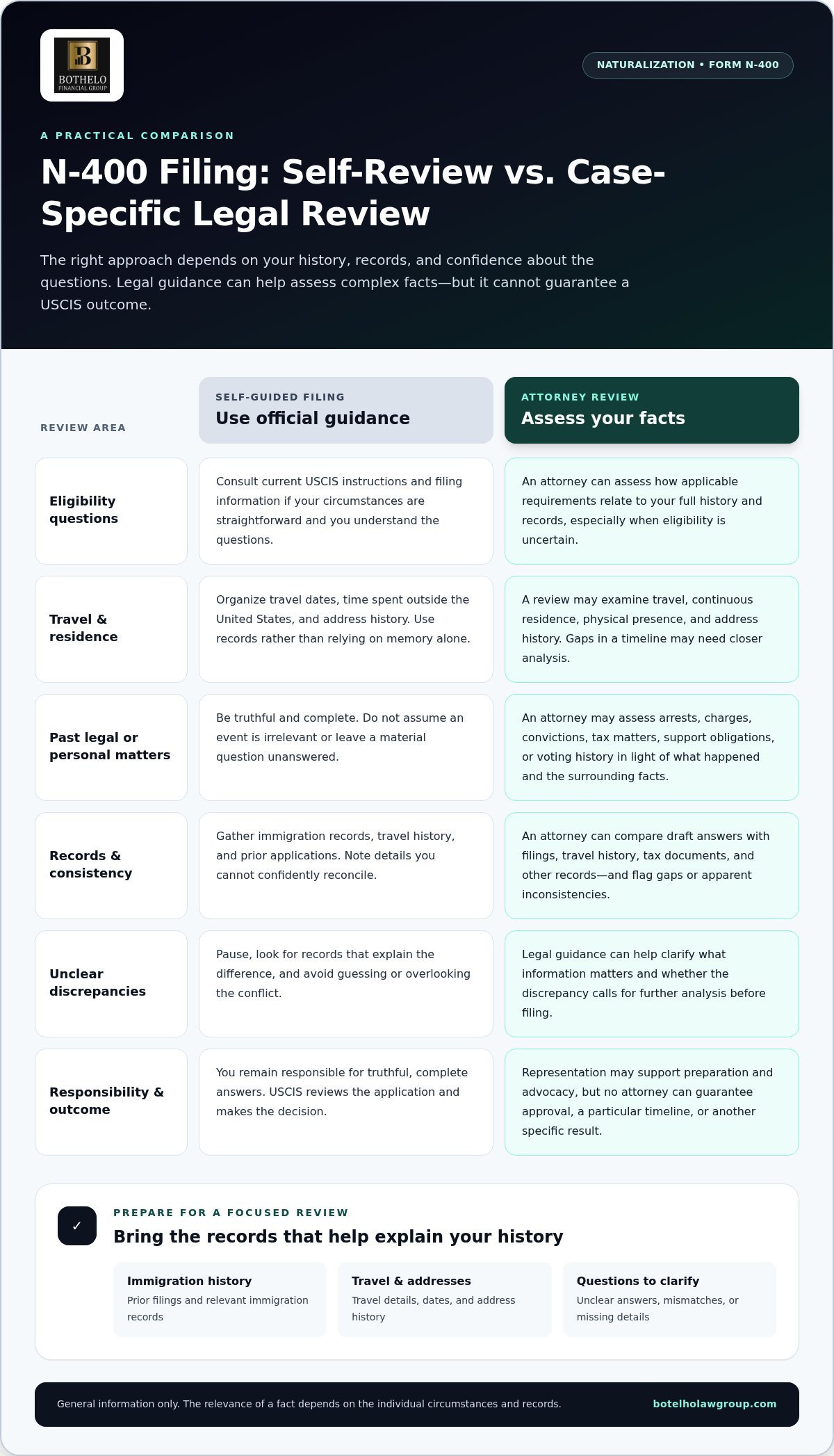
The comparison below can help clarify the difference. Neither approach guarantees approval or a particular decision from USCIS.
| Consideration | Filing on your own | Working with an attorney |
|---|---|---|
| Applicant responsibility | You complete the application, gather supporting documents, and provide complete, truthful answers. | You remain responsible for accurate information, while counsel can help review the application and explain what issues may need attention. |
| Legal analysis | You use current USCIS instructions to understand the form and general filing requirements. | An attorney can assess how eligibility questions relate to your individual facts and history. |
| Case-specific review | You identify and resolve any questions or inconsistencies yourself. | Counsel can compare answers with relevant records and help evaluate unresolved questions before filing. |
When self-filing may feel manageable
If your situation appears straightforward, you understand the questions, and you have no known complications, you may feel comfortable managing the paperwork yourself. Read the current USCIS instructions carefully, answer each question truthfully, and avoid relying on assumptions when you are unsure what a question asks. A form can still raise individual legal questions even if most fields seem clear. Pause if you encounter a past event or record you cannot confidently explain.
What legal representation adds to the decision
An N-400 citizenship application lawyer can review your facts, identify unresolved questions, and help you understand possible filing considerations. This structured review may be useful if different records appear inconsistent, your eligibility is uncertain, or your history raises legal concerns. Representation does not shift responsibility for truthful answers to the attorney, and it cannot promise that USCIS will reach a different decision.
Think of the choice as managing the process independently or getting legal analysis tailored to your circumstances. Counsel can help you prepare to address relevant questions, but USCIS retains authority to decide your application. If USCIS issues an adverse decision, the appropriate next step depends on the decision and your case. You can review N-400 denial appeal guidance to understand why prompt, case-specific legal review may matter after a denial.
What to Prepare for an N-400 Lawyer Review
Preparation helps an attorney focus on the facts that matter to your naturalization case. It does not replace completing or filing the application, and you do not need to resolve every question before seeking legal guidance. Bring what you have, identify what is missing, and explain where your memory or records are uncertain. An N-400 citizenship application lawyer can then help determine which details need closer assessment.
Records and details to organize
Gather current immigration documents and copies of relevant prior filings, if available. Organize travel dates and any records that help establish when trips began and ended. Note major changes in your personal circumstances that may relate to answers on the application. You do not need to decide in advance which document is legally significant. Counsel can identify which additional records are relevant to your individual case.
A simple folder or timeline can make the review more efficient. Keep original records intact, and separate confirmed information from estimates or recollections. If you notice a difference between a document and what you remember, flag it rather than trying to reconcile it on your own.
Questions to raise during a legal consultation
Write down questions before the meeting so you can use the time to address specific concerns. Ask how the attorney will assess eligibility issues, explain relevant legal options, and identify information that remains unresolved. Discuss the proposed scope of representation, how communication will work, and what responsibilities you will retain during the case. Clear expectations help you understand what the guidance covers and which steps may still be yours to complete.
Use an organized sequence to prepare:
- Collect available records. Include immigration documents, prior filings, and travel information that may relate to your answers.
- Note uncertainties. List dates you cannot confirm, missing documents, and details that may differ across records.
- Prepare questions. Identify the eligibility concerns and practical issues you want counsel to address.
Do not guess at an answer, omit information because it seems inconvenient, or alter a record to make your application appear stronger. If a fact is unclear, say so and bring the available context. Accurate disclosure gives counsel a sound basis to evaluate the issue. Preparation supports a careful review, not an effort to shape the facts toward a preferred result.
For broader local immigration context, read the Fall River immigration lawyer overview. Botelho Law Group is headquartered in Fall River and represents immigration clients throughout all 50 states. To discuss your naturalization circumstances and prepare for a case-specific review, request N-400 legal guidance.
Work With Botelho Law Group on Your N-400 Citizenship Application
Naturalization is a significant legal step, and questions about eligibility or personal history deserve an individual assessment. Botelho Law Group represents people seeking naturalization and citizenship, providing case-specific legal guidance to help applicants understand concerns before filing. An N-400 citizenship application lawyer can discuss how your circumstances relate to the application and what issues may need further attention. USCIS makes the final decision, so legal representation cannot guarantee eligibility, approval, or a particular processing time.
Nationwide immigration representation from a Fall River firm
Botelho Law Group is headquartered in Fall River, Massachusetts, and represents immigration clients throughout all 50 states. Its Massachusetts location does not limit naturalization representation to applicants who live in the state. The focus is your individual circumstances and the legal questions connected to your case.
Immigration matters can involve different processes, each with its own requirements and evidence. For example, a family-based green card petition is distinct from a naturalization application, even if both relate to one person’s broader immigration history. Understanding which process applies can help keep the legal questions clear. The firm’s family-based green card attorney resource provides context on that separate immigration process.
Take the next step with informed legal guidance
Begin by explaining your naturalization goals, relevant immigration history, and any questions that make you uncertain about filing. Be direct about details that may require careful review, including gaps in records or facts you are unsure how to describe. A clear discussion gives the attorney a basis to identify issues for analysis and explain the potential scope of representation.
Before moving forward, make sure you understand what legal work is included, what information you will need to provide, and what responsibilities remain yours. The details depend on your case and the agreed engagement. This conversation can help you understand the legal questions involved and decide on an informed path, but it is not a promise of a particular result.
If you are considering filing, discuss your N-400 application with Botelho Law Group. Share your goals and concerns so the legal questions can be considered in the context of your circumstances. Discuss your N-400 citizenship application and take a deliberate next step toward filing with a clearer understanding of your case.
Make Your Next Filing Decision With Clarity
Before submitting your application, take time to decide what you need to understand and which questions remain unresolved. A focused conversation with an N-400 citizenship application lawyer can help you identify the issues that deserve attention and clarify what legal guidance may involve. Prepare by noting your concerns and being candid about uncertainties, even if you do not yet have every answer or record.
The purpose of seeking advice is not to predict a USCIS decision. It is to make your next step more informed, based on your circumstances rather than assumptions. A legal discussion should give you a clearer understanding of the questions raised by your history and the responsibilities involved in moving forward.
When you are ready to discuss your circumstances, arrange a case-specific N-400 discussion with Botelho Law Group. A considered next step can help you approach the filing process with greater confidence.
Frequently Asked Questions
Can I apply for citizenship if I have an arrest or conviction?
An arrest or conviction does not automatically determine whether you can apply or what decision USCIS will make. The circumstances and case records matter. For example, an arrest that did not lead to a conviction may still require careful explanation. Gather available court records, including documents showing how the matter was resolved, and share them with an immigration attorney. An N-400 citizenship application lawyer can review your history in context before you file.
Can tax issues affect my N-400 citizenship application?
Tax issues may raise questions in a naturalization case, but their relevance depends on the specific facts and applicable law. If you have an outstanding tax matter, gather relevant returns, notices, or payment arrangements so an attorney can understand its status. Do not assume that a balance, amended return, or missing document has the same effect in every case. Explain unresolved matters truthfully and seek case-specific advice before deciding how to address them.
Can I travel while my N-400 application is pending?
Travel may be possible, but whether a particular trip is appropriate depends on your circumstances and your ability to respond to case notices. Before booking, consider whether you can attend scheduled appointments, such as an interview, and review current USCIS guidance. Keep a record of departure and return dates, even if plans change. If travel could affect your residence history or you are unsure about your documents, get legal advice before leaving.
How long does the N-400 citizenship process take?
There is no single processing time that applies to every applicant. Timing can change with USCIS workload, the office handling the case, and case-specific issues. Check USCIS’s current processing-time information for the relevant form and office, and treat estimates as guidance rather than a promised decision date. If your case appears outside the posted timeframe, review USCIS instructions for inquiries. An attorney can discuss case-specific questions but cannot control agency processing.
Can an N-400 application be corrected after it is filed?
The right response depends on the error, when you discover it, and the application’s status. Do not assume a mistake can be fixed informally or that submitting another application is the correct solution. Save a copy of the filed form, identify the specific answer in question, and keep related records or USCIS notices together. Then use current agency instructions and seek legal advice promptly to determine how to address the issue.
Can a lawyer help with an N-400 application if I live outside Massachusetts?
Yes. Botelho Law Group is headquartered in Fall River, Massachusetts, and provides immigration representation to clients in all 50 states. Your state of residence does not by itself resolve the legal questions in a naturalization case. Be prepared to explain your location, immigration history, and concerns so the firm can discuss your matter and how representation may proceed. Applicants in Massachusetts can also discuss their case with the firm locally.