
What if the most important part of a U.S. visa application happens before you complete a form? Choosing a category that doesn’t match your purpose, or submitting evidence that conflicts with your answers, can create avoidable problems. Effective US visa application help starts with identifying the right pathway and the facts your case needs to establish.
If you’re unsure which visa applies, what documents to gather, or what happens after filing, that uncertainty is understandable. The process differs depending on whether you’re seeking temporary travel, a family- or employment-based visa, permanent residence, or consular processing from abroad. Careful preparation helps you present accurate, consistent information at each stage.
This guide explains how to identify the general application pathway, organize forms and supporting evidence, and prepare for appointments and next steps. It also covers when case-specific immigration representation may be useful, particularly if your history or circumstances raise questions that routine form completion can’t resolve. Based in Fall River, Massachusetts, Botelho Law Group represents immigration clients nationwide and assists individuals abroad with consular processing.
Key Takeaways
- US visa application help can clarify procedures and support case preparation, but it can’t guarantee eligibility, approval, or processing time.
- Start by matching your purpose and circumstances to the appropriate general visa pathway. The forms and agency instructions depend on that route.
- Use current official instructions and organize records so names, dates, travel purposes, and other details are consistent.
- Understand how immigrant and nonimmigrant visa applications differ, and where to find guidance for each route.
- Case-specific immigration representation can help assess potential pathways and prepare evidence, including for applicants navigating consular processing abroad.
US Visa Application Help: What Support Can and Cannot Do
US visa application help can include procedural guidance, support organizing forms and documents, and legal representation when an applicant’s circumstances call for a case-specific assessment. These kinds of support serve different purposes. Official instructions explain procedures and filing requirements. Legal counsel can assess how the rules may apply to an individual’s goals, immigration history, and evidence.
No representative can guarantee that someone qualifies for a visa, that an application will be approved, or that it will be decided within a particular time. An attorney can help identify issues, prepare an accurate application, and address questions raised by the case. The decision rests with the relevant U.S. authorities.
An immigration attorney can review an applicant’s purpose, history, family or employment circumstances, potential pathways, and available records to identify legal questions that may affect the application. This can help clarify what needs to be resolved before a form is submitted.
For a broad introduction to visa categories and policy, see this US visa policy overview. General reference material can explain the landscape, but it can’t determine which route fits a specific person or how their past circumstances may affect eligibility.
What questions should applicants resolve before starting?
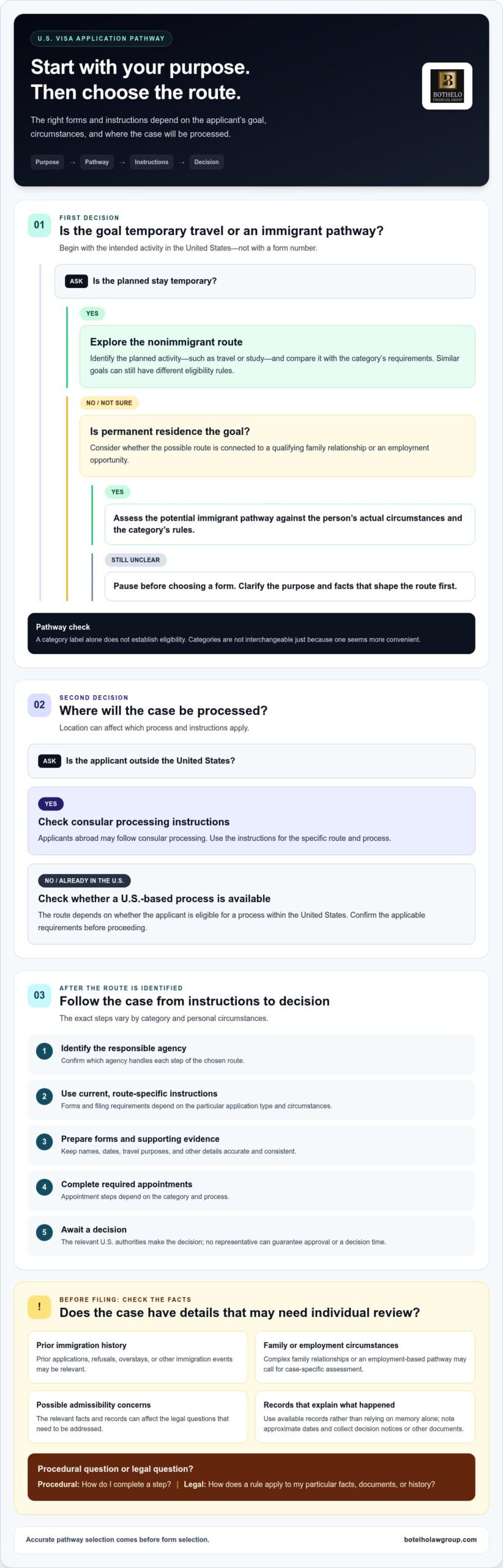
Before selecting a form, write down the basic facts that shape the application: the planned activity in the United States, the intended length of stay, and the applicant’s current location. Someone seeking temporary travel may follow a different process from someone pursuing permanent residence through a qualifying family or employment relationship. An applicant abroad may also follow consular processing instructions rather than a process available to someone already in the United States.
Gather a complete immigration history before filing. Prior applications, refusals, overstays, or other immigration events may be relevant, even if they happened years ago. Don’t rely on memory alone when records are available. Note approximate dates and collect decision notices or other documents that may help explain what happened.
Choosing a form before identifying the pathway can lead to confusion. Forms relate to particular application types and circumstances. Starting with a form number may send an applicant toward the wrong materials or leave an important question unaddressed. First establish the purpose and possible route, then use the instructions for that route.
When is legal guidance especially useful?
Legal guidance may be valuable when an application involves complicated family relationships, an employment-based pathway, possible admissibility concerns, or prior immigration history. These circumstances don’t determine the outcome by themselves, but they can make the legal analysis more dependent on the facts. A procedural question asks how to complete a step. A legal question asks how a rule applies to an applicant’s particular facts, documents, or history.
Botelho Law Group represents immigration clients across all 50 states and assists people abroad with consular processing. Individualized representation can help applicants evaluate their circumstances and prepare a case with attention to the issues that matter, rather than treating the process as form-filling alone.
How the U.S. Visa Application Process Moves from Pathway to Decision
A U.S. visa application involves a series of decisions and preparation steps, not just one form. The route depends on the applicant’s purpose, the category’s eligibility rules, and whether the case proceeds through a U.S. consulate abroad or an eligible process within the United States. In brief, identify the purpose, assess the pathway, confirm the responsible agency and current instructions, prepare the forms and evidence, complete required appointments, and await a decision.
US visa application help can make this sequence easier to manage, but the exact steps vary by category and personal circumstances. A family-based petition, an employment-related case, and an application for temporary study do not necessarily use the same forms or follow the same process. A checklist for one category may include missing or irrelevant materials when applied to another.
How do applicants identify the right visa pathway?
Start with the intended activity in the United States and whether the goal is temporary travel or an immigrant pathway connected to permanent residence. Then consider the facts that may shape the category, such as a qualifying family relationship, an employment opportunity, or a planned course of study. Similar goals can still involve different eligibility requirements. Categories aren’t interchangeable just because one appears more convenient.
Use official agency information to understand general requirements, then compare them with the applicant’s actual circumstances. A category label alone doesn’t establish eligibility. If more than one route may apply, or the history includes prior immigration events, case-specific legal analysis can help clarify which questions to resolve before preparing forms.
What happens after choosing a general pathway?
Once the route is understood, identify the agency responsible for each step and find the current instructions for the specific form and process. U.S. Citizenship and Immigration Services (USCIS) handles many petitions and applications, including certain processes for eligible applicants in the United States. The Department of State (DOS) handles visa processing through U.S. embassies and consulates abroad. Some cases involve steps with both agencies, so completing one stage may not be the final decision.
Applicants proceeding abroad should follow the relevant consular post’s current appointment and document instructions. Applicants using a process within the United States should follow the USCIS instructions that apply to their application. If an interview or other appointment is required, use directions for the relevant agency or post, not a checklist prepared for a different category or location.
Before submitting, check that the form edition, supporting documents, and answers match the current official instructions. Keep copies of what you filed and note any appointment or response deadlines communicated by the relevant agency. These steps help you maintain an organized record as the case moves forward, but they don’t control processing time or determine the outcome.
Agency roles and filing routes can be difficult to distinguish, particularly when a case involves more than one step. Botelho Law Group represents immigration clients nationwide and assists people abroad with consular processing. Applicants seeking guidance tailored to their circumstances can learn about immigration representation.
Immigrant or Nonimmigrant Visa: Which Application Route Fits the Purpose?
A useful first distinction is whether the applicant seeks temporary travel or an immigrant pathway toward permanent residence. That distinction helps frame the next questions, but it doesn’t establish eligibility. The applicant’s purpose, relationships, employment circumstances, location, and immigration history may all affect which route and process are relevant.
| Route | Broad purpose | General pathway and instructions |
|---|---|---|
| Nonimmigrant | Temporary travel to the United States for an authorized purpose. | Often involves applying for a temporary visa through the Department of State. Consult current State Department and relevant consular post instructions. |
| Immigrant | Seeking to immigrate to the United States, commonly through a qualifying family or employment basis. | May involve a petition and later immigrant visa processing abroad, or a separate process for eligible applicants in the United States. Check USCIS and Department of State instructions applicable to the case. |
This comparison is a starting point, not a substitute for official requirements or individualized legal advice. The route isn’t simply a matter of preference or choosing whichever process seems faster or easier. The legal category must fit the applicant’s purpose and facts. For forms, evidence requirements, and filing steps, use current instructions from the responsible agency and, for consular cases, the relevant post.
When does a nonimmigrant visa pathway generally apply?
A nonimmigrant pathway may be relevant when someone plans to come to the United States temporarily, such as for travel, study, or another temporary activity. These examples describe broad purposes, not a finding that a particular person qualifies. The applicant’s stated reason for travel should align with the information and supporting records provided. If the purpose or plans change, review the application details carefully before submission.
When might an immigrant visa pathway be relevant?
An immigrant pathway may be relevant when the goal is to immigrate rather than make a temporary visit. Family-based and employment-based cases have distinct legal frameworks, petition steps, and evidence considerations. Someone considering permanent residence through a qualifying family relationship can review this family-based green card guide. Applicants with work-related questions can consult the employment-based visa attorney guide.
Marriage and fiancé-based routes also have separate considerations. A couple shouldn’t assume that spouse and fiancé categories are interchangeable simply because both involve a relationship with a U.S. citizen. Compare the purpose and circumstances with current official guidance, and seek legal analysis if the facts raise questions about the appropriate route. US visa application help is most useful at this stage when it distinguishes general category information from advice tailored to the applicant’s circumstances.
Prepare Forms and Evidence Carefully to Reduce Avoidable Problems
Accurate preparation starts with the instructions for the applicant’s specific pathway. Use the latest official form edition and current guidance from the responsible agency, along with the checklist that applies to that route. Requirements can differ by category and location, so a checklist prepared for another applicant or consular post may not identify the documents needed for this case.
Consistency across forms and evidence helps decision-makers assess the application against a clear, coherent record. Review names, dates, addresses, travel purposes, and descriptions of family or employment circumstances across every document. If a record appears to conflict with an answer, identify the discrepancy and understand it before filing rather than hoping it goes unnoticed.
Don’t leave required questions incomplete, make unsupported claims, or copy explanations from another person’s application. Answers should reflect the applicant’s own facts and be supported by relevant records where appropriate. If an answer is uncertain or a document uses a different date or spelling, investigate the difference and provide an accurate explanation where the form or process allows.
What should applicants organize before completing forms?
Gather records relevant to the chosen pathway before drafting answers. Depending on the case, these may include identity and travel documents, family or employment records, and documents from prior immigration matters. Create a simple timeline of important events, such as travel, changes in employment, or earlier applications, then compare it with available records. This can reveal a date discrepancy before it appears across multiple forms.
Keep copies organized and protect sensitive personal information. Submit documents only through the official channel specified for the application or appointment. Avoid sending private records through an unverified website or contact method. Organization doesn’t replace the official checklist, but it helps applicants locate records and respond accurately while preparing the file.
How can applicants prepare for an interview or follow-up?
Before an interview, review the submitted application and supporting evidence so your answers accurately reflect what was filed. Understand the facts of your case rather than memorizing a script. Follow current instructions from the relevant embassy or consulate for appointment procedures and required materials. Directions may differ by post and case type. Keep copies of submitted materials accessible for reference.
A prior refusal, conflicting records, or complicated immigration history can make preparation more fact-dependent. Legal review may help identify what needs clarification and how the application record relates to the applicant’s circumstances. US visa application help from an immigration attorney can address these issues alongside form preparation, rather than treating each answer in isolation.
If questions about your records or history make it difficult to prepare a consistent application, request individualized immigration case review from Botelho Law Group. The firm represents immigration clients nationwide and assists individuals abroad with consular processing.
How Botelho Law Group Provides U.S. Visa Application Help
Strong representation begins with the applicant’s objectives and circumstances, not with a stack of forms. Botelho Law Group provides US visa application help by assessing an applicant’s goals, immigration history, potential pathways, forms, and supporting evidence. This individualized review can clarify what issues need attention and how to prepare a coherent application. It cannot guarantee eligibility, approval, or a particular processing time.
Based in Fall River, Massachusetts, the firm represents immigration clients across all 50 states and assists individuals abroad with consular processing. Its immigration services include family-based green card petitions, naturalization and citizenship applications, employment-based visas, deportation defense, fiancé and spouse visas, and asylum and refugee representation. Counsel can consider how the facts and records relate to the process, providing legal guidance and representation rather than form completion alone.
What can an immigration attorney contribute to an application?
An attorney can review the applicant’s objectives and history, help evaluate potential pathways, examine forms and supporting records, and identify questions to resolve before submission. For example, if dates in an application differ from dates in travel or employment records, counsel can help assess the discrepancy and consider how to address it accurately. This review supports careful preparation, but it can’t control the government’s decision.
Legal counsel can also explain procedural steps in the context of the particular matter and help applicants understand which instructions and evidence are relevant. Applicants remain responsible for providing truthful information, reviewing their submissions, and following official instructions. Representation doesn’t replace the applicant’s responsibility to be accurate or the government agency’s role in deciding the case.
What should an applicant expect when seeking legal assistance?
Prepare a concise summary of your objective, current location, relevant immigration history, and important dates. Include information about prior applications or refusals and identify any records that appear inconsistent. Organizing these facts at the outset helps counsel understand the matter and determine what additional details may be needed for a meaningful assessment.
The appropriate scope of representation depends on the specific case. Some matters may call for pathway analysis and document review, while others may require broader support through application preparation or consular processing. Needs differ with each applicant’s circumstances, so an initial discussion should focus on the facts rather than assumptions about which form or route applies.
Botelho Law Group provides individualized immigration representation to clients nationwide, including people navigating consular processing abroad. If you need case-specific guidance on your goals, history, or application preparation, contact Botelho Law Group to discuss your immigration matter.
Take the Next Step with a Clear Plan
Before submitting an application, consider whether the proposed route reflects your actual objective and circumstances. A decision made too early can create extra work or leave important questions unresolved. If you’re uncertain about how your history, plans, or records may affect the case, individualized legal guidance can help you decide what to address before moving forward.
US visa application help is most valuable when it brings the applicant’s specific facts into focus. A careful review can clarify what questions need attention, which records may be relevant, and what next steps to consider. No representative can promise a government decision, but a well-informed plan can help you approach the process with greater care and confidence.
Discuss your U.S. visa application with Botelho Law Group for guidance tailored to your circumstances. Start with a clear account of your goal and history, and take the next step with a focused understanding of your case.
Frequently Asked Questions
What does US visa application help include?
US visa application help may include procedural explanations, assistance preparing application materials, document review, and legal representation tailored to an applicant’s circumstances. The scope depends on the case. Someone with a straightforward filing question may need different support from an applicant with a past refusal or conflicting records. Legal assistance can help identify issues and organize a response, but it can’t guarantee eligibility, approval, or a decision by a particular date.
Can an immigration lawyer help with a U.S. visa application from outside the United States?
Yes. Immigration counsel can assist people abroad with consular processing, including reviewing the applicant’s circumstances and helping prepare for steps connected to a U.S. visa application. Botelho Law Group, based in Fall River, Massachusetts, represents immigration clients nationwide and assists individuals abroad. The relevant U.S. consulate’s current instructions remain essential because appointment procedures and document directions can vary by post.
How do I know which U.S. visa application form I need?
First identify the purpose and general immigration pathway, then use the current official instructions for that route to determine the forms. For example, the DS-160 is commonly used for nonimmigrant visa applications, while family-based immigration may involve a petition such as Form I-130. A form’s name alone doesn’t establish that it fits your circumstances. Check the responsible agency’s current form page before preparing or submitting anything.
What documents are generally needed for a U.S. visa application?
Documents depend on the visa category and the applicant’s circumstances. A file may call for identity and travel records, evidence supporting the stated purpose, or records tied to a family or employment relationship. Prior immigration notices can also matter if the applicant has a relevant history. Use the official checklist for the specific route, submit records requested or relevant to that process, and keep copies of submitted materials.
Can I reapply after a U.S. visa application is refused?
In some situations, an applicant may submit another application after a refusal, but reapplying without understanding the stated reason may not address the problem. Review any refusal notice and instructions, then consider whether the facts or supporting evidence have changed or can be clarified. A new filing doesn’t guarantee a different result. If the refusal relates to complicated history or unclear legal issues, seek case-specific advice before deciding what to do next.
How much does help with a U.S. visa application cost?
Legal fees depend on the matter and the scope of representation. Botelho Law Group’s fees may be structured as a flat rate for a specific immigration filing or billed hourly for complex matters. Government filing fees are separate and set by the relevant agencies. They can change, so check current official fee information. Before engaging counsel, clarify the work covered and the applicable billing arrangement.
Do I need a lawyer to apply for a U.S. visa?
Not every applicant needs an attorney. Some people may be able to prepare an application using official instructions. Legal guidance can be especially useful when the case involves a prior refusal, inconsistent records, complicated family or employment circumstances, or uncertainty about the correct pathway. An attorney can assess those facts and help prepare the case, but the applicant must provide truthful information and no lawyer can promise approval.